A Mindee Alternative
Finished Financial Extraction With Validation & Export
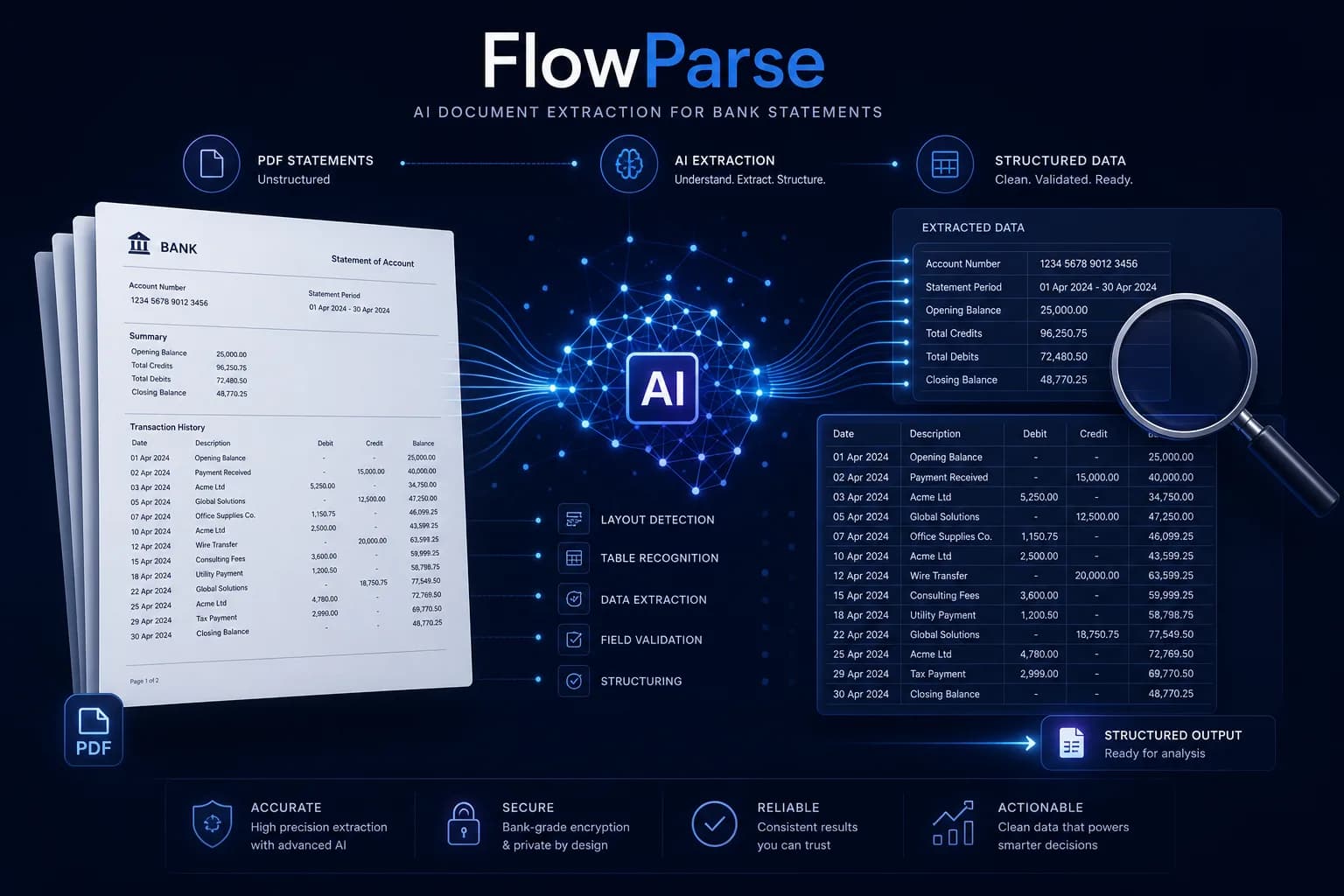
Mindee is a developer-first document-parsing API with prebuilt APIs (invoices, receipts, financial documents) and a custom document builder — you call it and integrate the parsed fields. FlowParse is the finished layer for financial documents: it reads statements, invoices and receipts, validates the numbers, exports native QBO/QFX/OFX/Xero/Excel, and adds a self-serve app on top of the API — with a free tier.
Developers who want a clean parsing API with prebuilt and custom models, and will build the validation, reconciliation and accounting-export layers into their own product.
Teams that want bank statements, invoices and receipts turned into validated, importable data immediately — through an app or an API — with accounting export and consolidation already built in.
Why Businesses Look for Mindee Alternatives
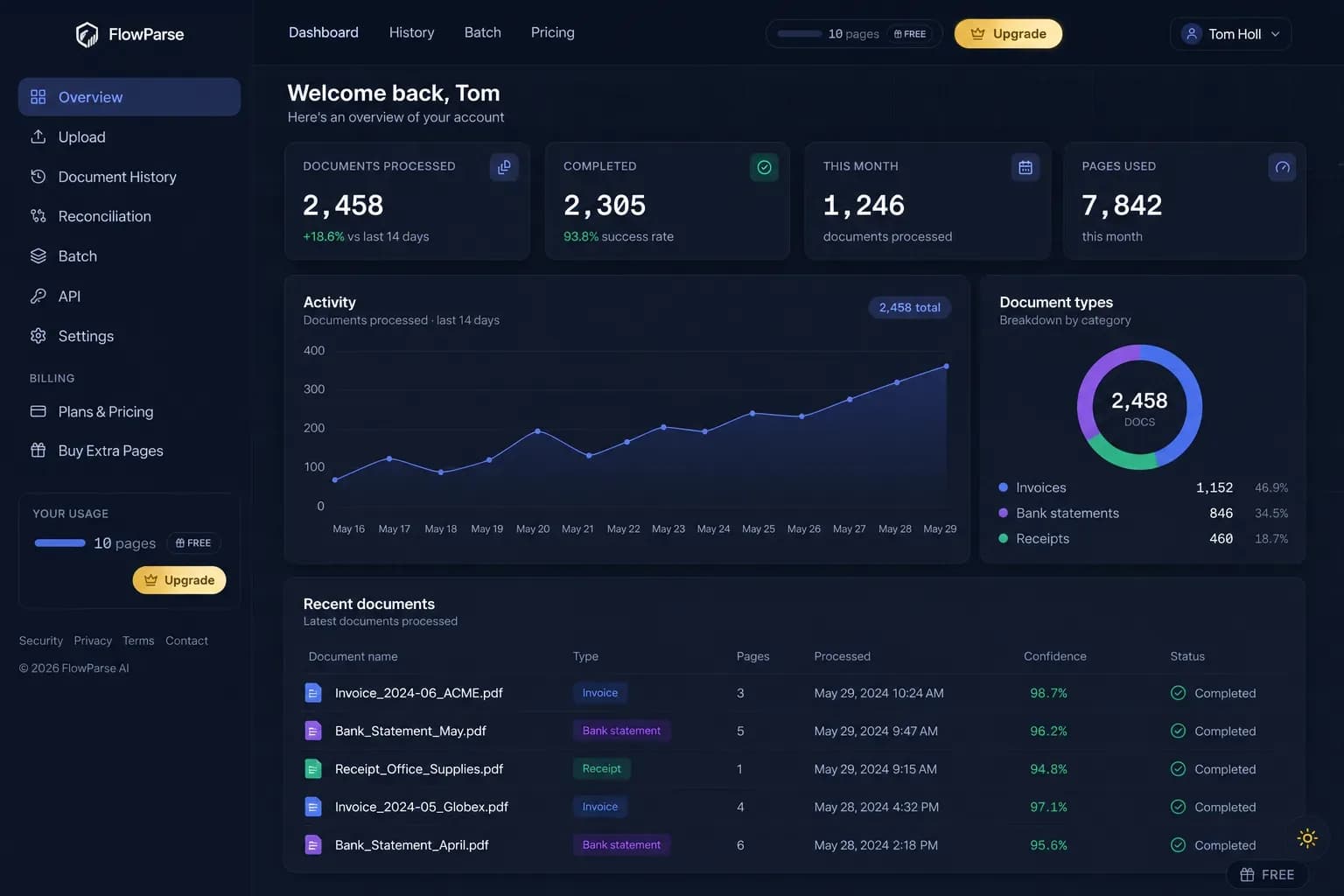
A finished workflow, not just fields
Mindee returns parsed fields to integrate; FlowParse adds validation, reconciliation, review and export around them.
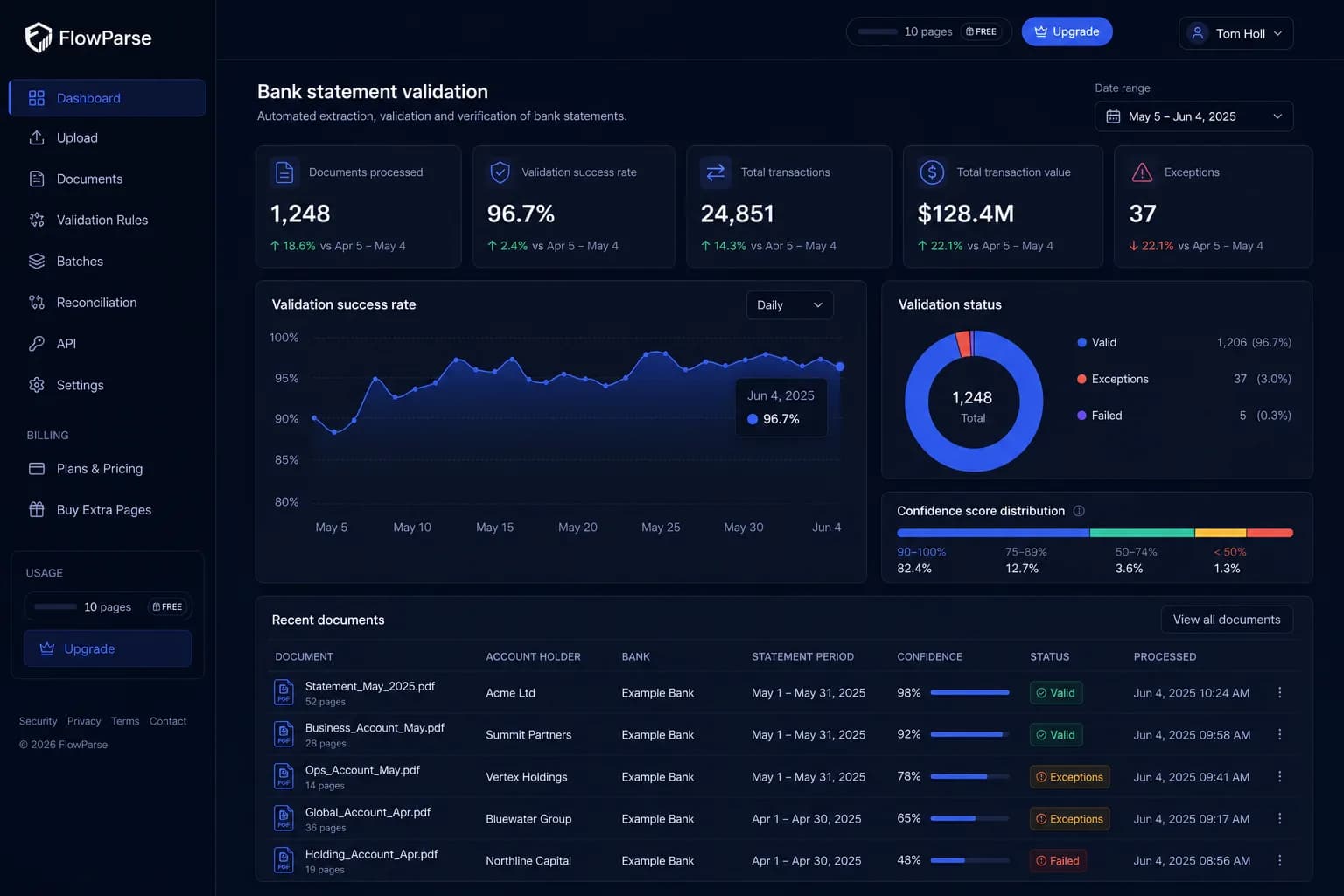
Balance validation in the box
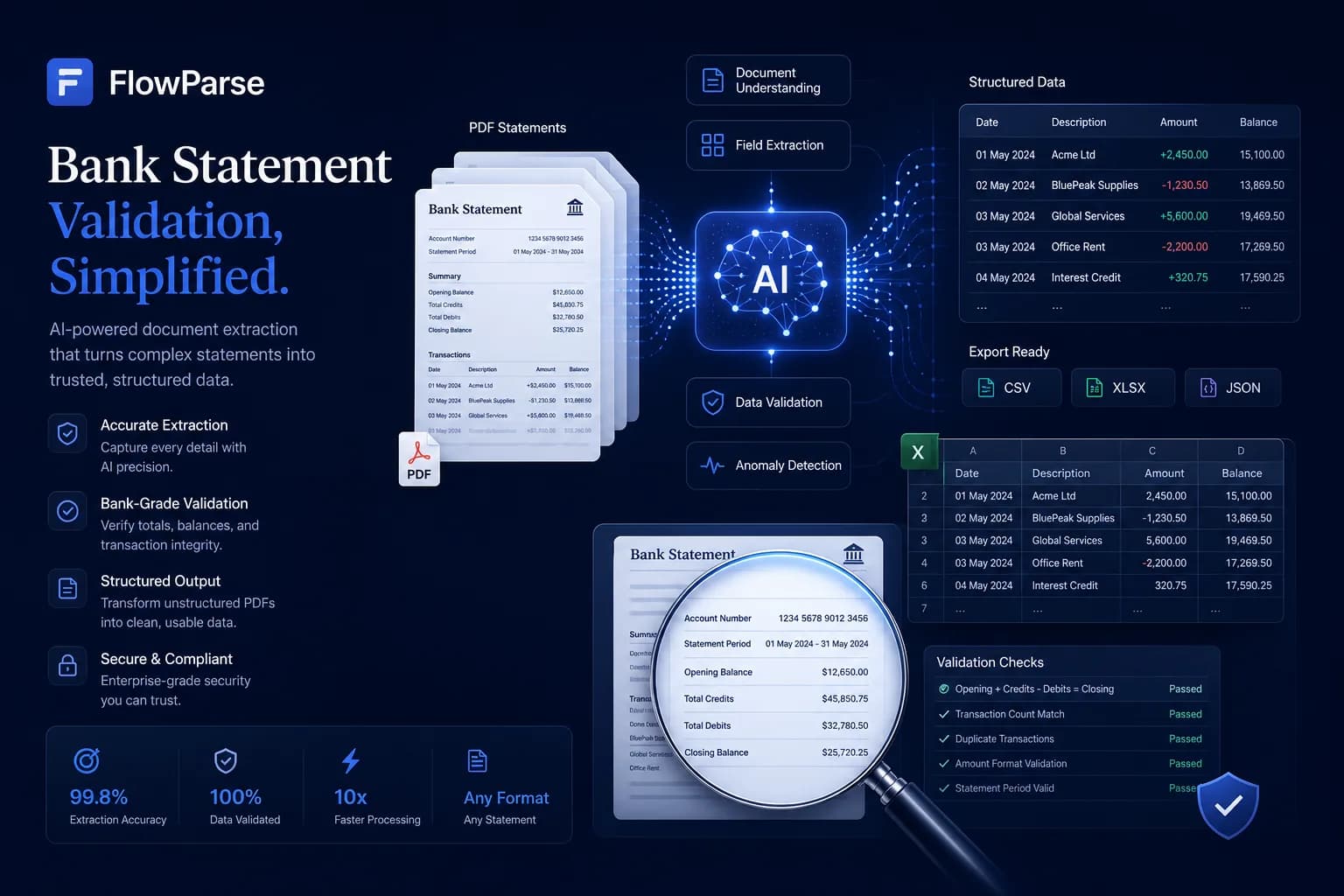
A deterministic check confirms opening + transactions = closing, with a 0-100 quality score — no rules to author.
Accounting-ready export
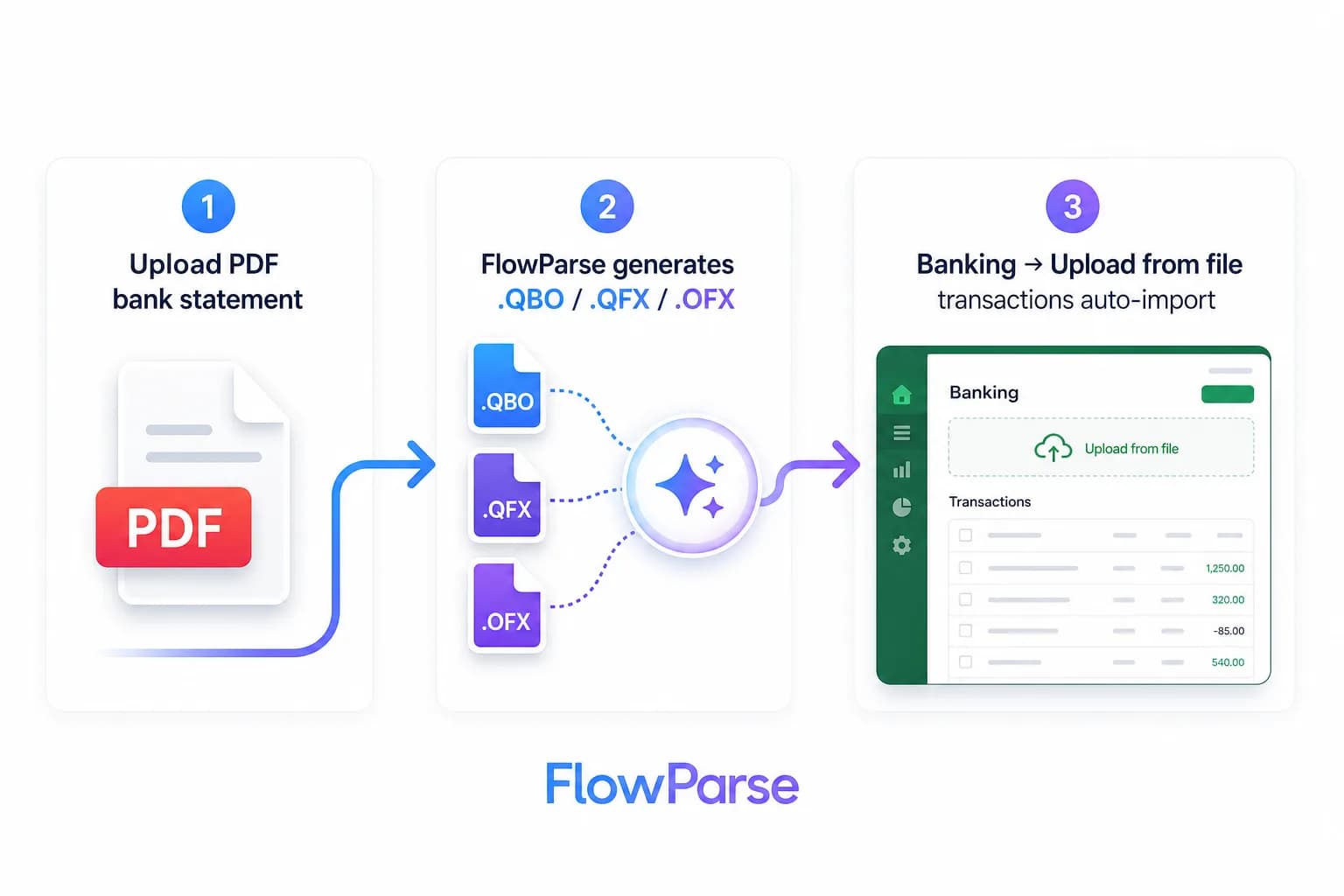
Native .QBO/.QFX/.OFX and Xero/Excel files, not fields you map into a ledger yourself.
An app, not only an API
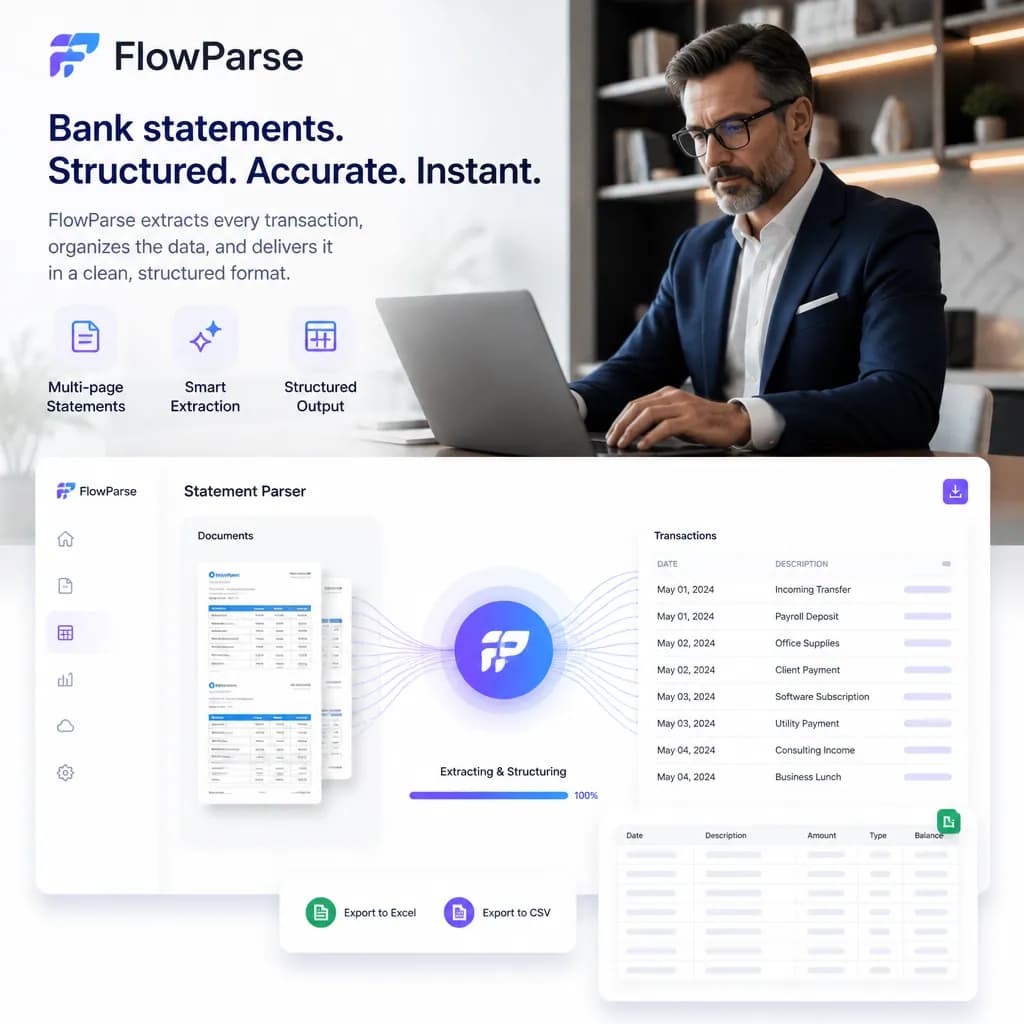
Non-developers can convert a statement in the browser and review it — no code required.
Statement consolidation built in
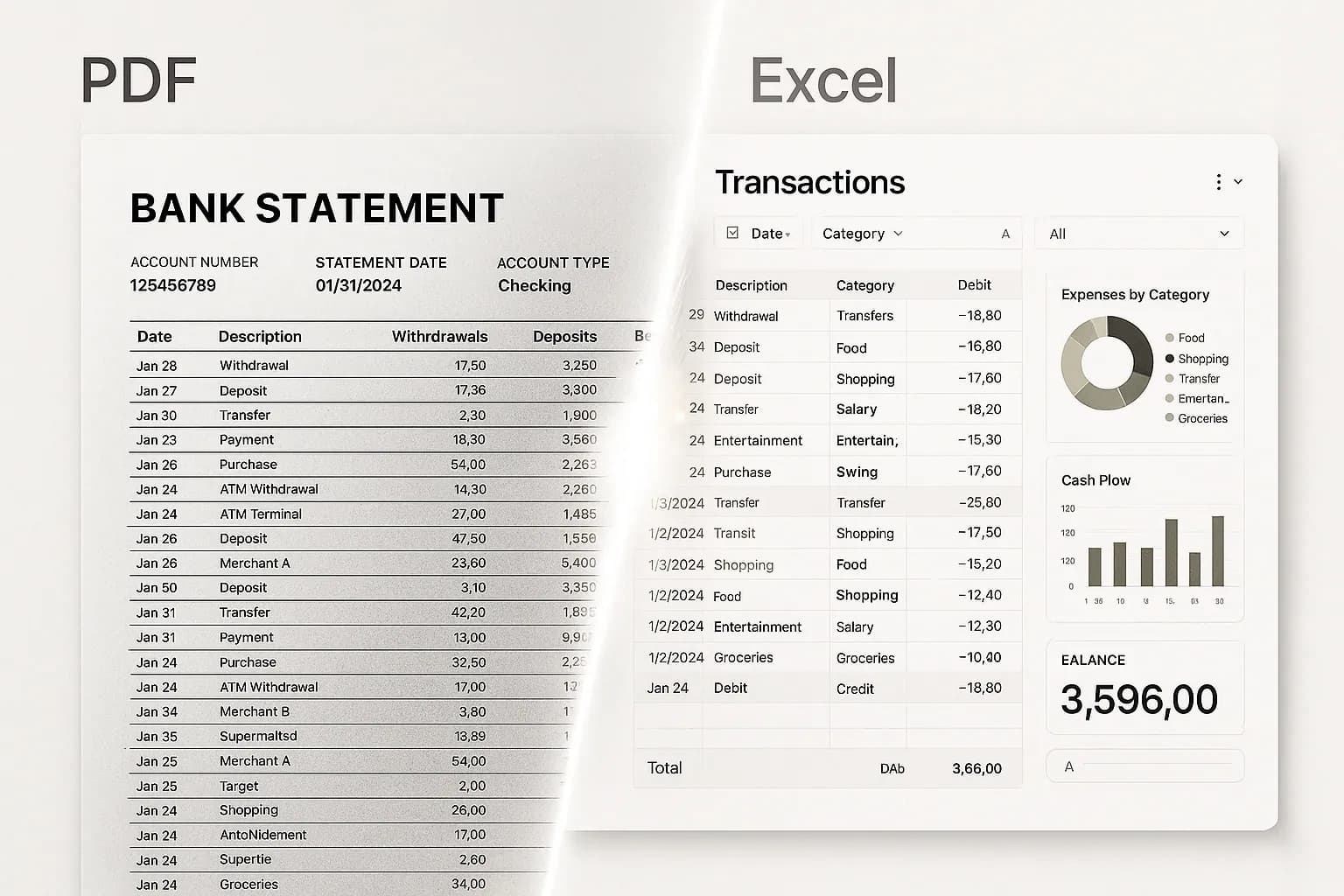
Smart Merge turns a year of PDFs into one reconciled Excel — a workflow, not a parse.
Self-serve and free to start
Convert a real statement today or call one REST endpoint — with a free monthly allowance.
Quick Comparison — Mindee vs FlowParse
A feature-by-feature look at Mindee and FlowParse.
| Feature | Mindee | FlowParse |
|---|---|---|
| Bank statement PDF → structured transactions | Parsed fields via API | Yes |
| Debit/credit → single signed amount | Build it yourself | Yes |
| Balance reconciliation + quality score | No | Yes |
| Native .QBO / .QFX / .OFX export | No | Yes |
| Xero / Excel / CSV export | Build it yourself | Yes |
| Smart Merge — 100 PDFs → 1 Excel | No | Yes |
| Self-serve app for non-developers | No | Yes |
| Editable review grid for humans | No | Yes |
| Invoice/receipt parsing API | Yes | Yes |
| Custom document model builder | Yes | Pre-trained finance set |
| REST API | Yes | Yes |
| Free tier | Free pages/month | Free pages/month + no-signup try |
What Is Mindee?
Mindee is a document-parsing platform built for developers. It offers prebuilt APIs for common documents — invoices, receipts, financial documents, IDs — plus a custom builder for training your own document types, all behind a clean REST API with good SDKs and documentation. It's a pleasant, capable API: you send a document, you get back structured fields with confidence, and you wire those into your product. For engineering teams adding document capture to an application, it's a strong choice.
What Mindee gives you is a parse, not a finished financial workflow. The layers that make extracted data usable in accounting — reconstructing a full transaction list from a statement, merging debit and credit into a signed amount, validating that the balance reconciles, consolidating a year of statements, presenting the data for a human to review and correct, and exporting a file QuickBooks or Xero will import — are yours to build in your own product. And Mindee is an API only: there's no end-user app for the accountant who just needs to convert a statement.
FlowParse is finished for the financial case, at both levels. It's pre-trained on bank statements, invoices and receipts and returns validated data — signed transactions, line items, totals and tax — with the [validation](/features/validation-engine), [Smart Merge](/merge-pdf-to-excel), review grid and native [accounting export](/features/accounting-software-export) already built. And it's both a self-serve browser app and a metered REST API, so a non-developer converts in the browser while a developer automates over REST — with a free tier either way.
Mindee strengths
- Clean, developer-friendly REST API with good SDKs and docs
- Prebuilt APIs for invoices, receipts and financial documents
- Custom document builder for training bespoke types
- Per-document pricing that suits product integrations
Where teams want something different
- Returns parsed fields — no balance validation, reconciliation or consolidation
- No native QBO/QFX/OFX/Xero accounting-export files — you build the mapping
- API only — no self-serve app for non-developers
- The financial workflow (review, merge, export) is yours to build in your product
Why Teams Switch to FlowParse
Get the workflow, not just the parse
Validation, reconciliation, review and export come built in — not layers you add to a raw parse.
Statements to a real bank feed
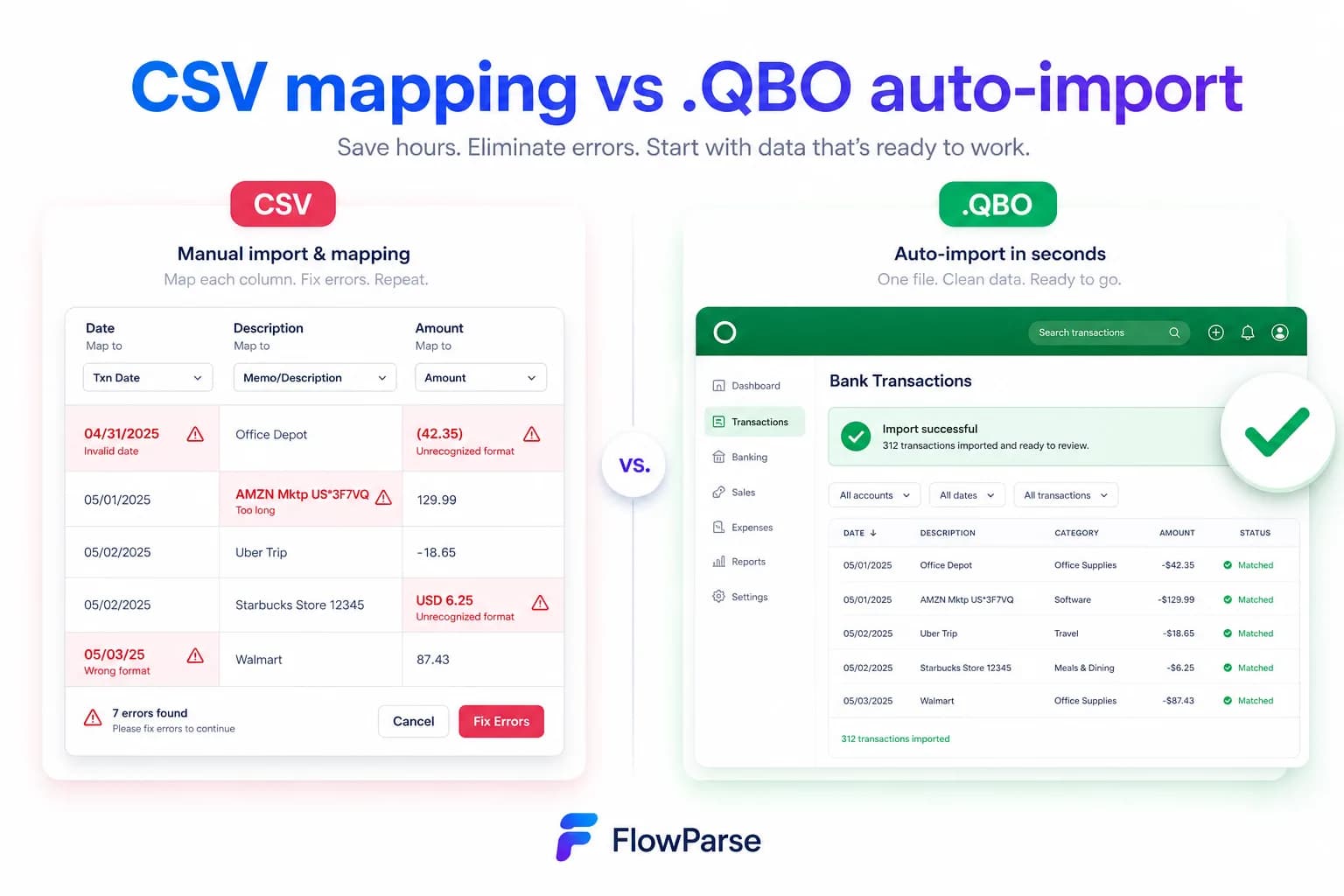
Export .QBO/.QFX/.OFX (OFX 1.0.2, FITID de-dup) so imports never double-post — no mapping to build.
A quality gate you can trust
Balance reconciliation, duplicate detection and a 0-100 score ship in the box.
An app for the non-developers
Accountants and ops staff convert and review in the browser, no code required.
Consolidate and reconcile
Merge a year into one Excel and match payments to invoices, out of the box.
Free to evaluate
Run a real statement through the whole flow before committing anything.
Parsing API vs finished workflow
Mindee gives you a clean API to parse documents. FlowParse gives you the finished financial workflow — app and API — around the parse.
Mindee path
- Integrate the parsing API
- Handle the returned fields in code
- Build validation + reconciliation
- Build export + a review UI yourself
- Maintain it in your product
FlowParse path
- Use the app or one API call
- Get validated transactions + fields
- Balance check + editable review built in
- Smart Merge to consolidate
- Export native QBO/QFX/OFX/Xero/Excel
Pricing Comparison
How the cost and commitment models compare.
| Feature | Mindee | FlowParse |
|---|---|---|
| Free tier | Free pages/month | Free pages/month + no-signup try |
| Model | Per document/API call | Per page from a balance |
| Self-serve app | No (API only) | Yes (browser app) |
| Accounting-export files | Build it yourself | Yes (QBO/QFX/OFX/Xero) |
| Setup to first result | API integration | None (app) / one call (API) |
Accuracy Comparison
Both platforms use modern AI OCR — here is how extraction quality is assured.
| Feature | Mindee | FlowParse |
|---|---|---|
| Invoice / receipt fields | Strong (prebuilt API) | Strong (out of box) |
| Bank statement transactions | Parsed fields | Every row, balance-validated |
| Debit/credit normalisation | Build it yourself | Single signed amount |
| Balance reconciliation | No | Built in |
| Human review step | Build it yourself | Editable grid + API |
Who should choose Mindee?
- Developers embedding document capture in their own product
- Teams that want a clean parsing API and will build the rest
- Products needing a custom builder for bespoke document types
- Use cases spanning documents beyond the financial set
Who should choose FlowParse?
- Accountants and finance teams converting statements and invoices
- Developers wanting finished financial data plus export from one API
- Teams that need an app for non-developers, not only an API
- Anyone wanting a free, self-serve way to convert a document
Migrating from Mindee to FlowParse
Switching takes minutes — there are no templates to rebuild or models to retrain.
Export your documents
Export invoices and statements from Mindee or your source.
Upload to FlowParse
Drag and drop PDFs, scans, or images — no setup.
Review extracted data
Check fields in the editable preview before export.
Export Excel or CSV
Download structured data for your accounting system.
Automate workflows
Use the API and integrations for future documents.
Mindee vs FlowParse: a parse vs a workflow
Both read documents, but they hand you different things. Mindee hands you a parse: send an invoice or a statement to its API and get structured fields back, cleanly and quickly, ready for you to integrate into your product. That's exactly what a developer building document capture into an application wants — a dependable API and a custom builder for the document types the prebuilt APIs don't cover. The financial workflow around the parse is something you assemble in your own codebase.
FlowParse hands you the workflow. Upload a bank statement or invoice and you don't just get fields — you get validated, signed transactions, a balance check, an editable review grid, Smart Merge consolidation and native accounting export, all included. And it's an app as well as an API, so the accountant who just needs to convert a statement can, without anyone building a UI first.
So the deciding question is whether you want a parsing API to build a product on, or a finished financial workflow you can use immediately. If you're a developer assembling document capture and want a clean API plus a custom builder, Mindee is a good fit. If you want statements, invoices and receipts turned into validated, importable data — through an app or an API — FlowParse already contains the layers you'd otherwise build on top of a parse.
The layers a parse still needs
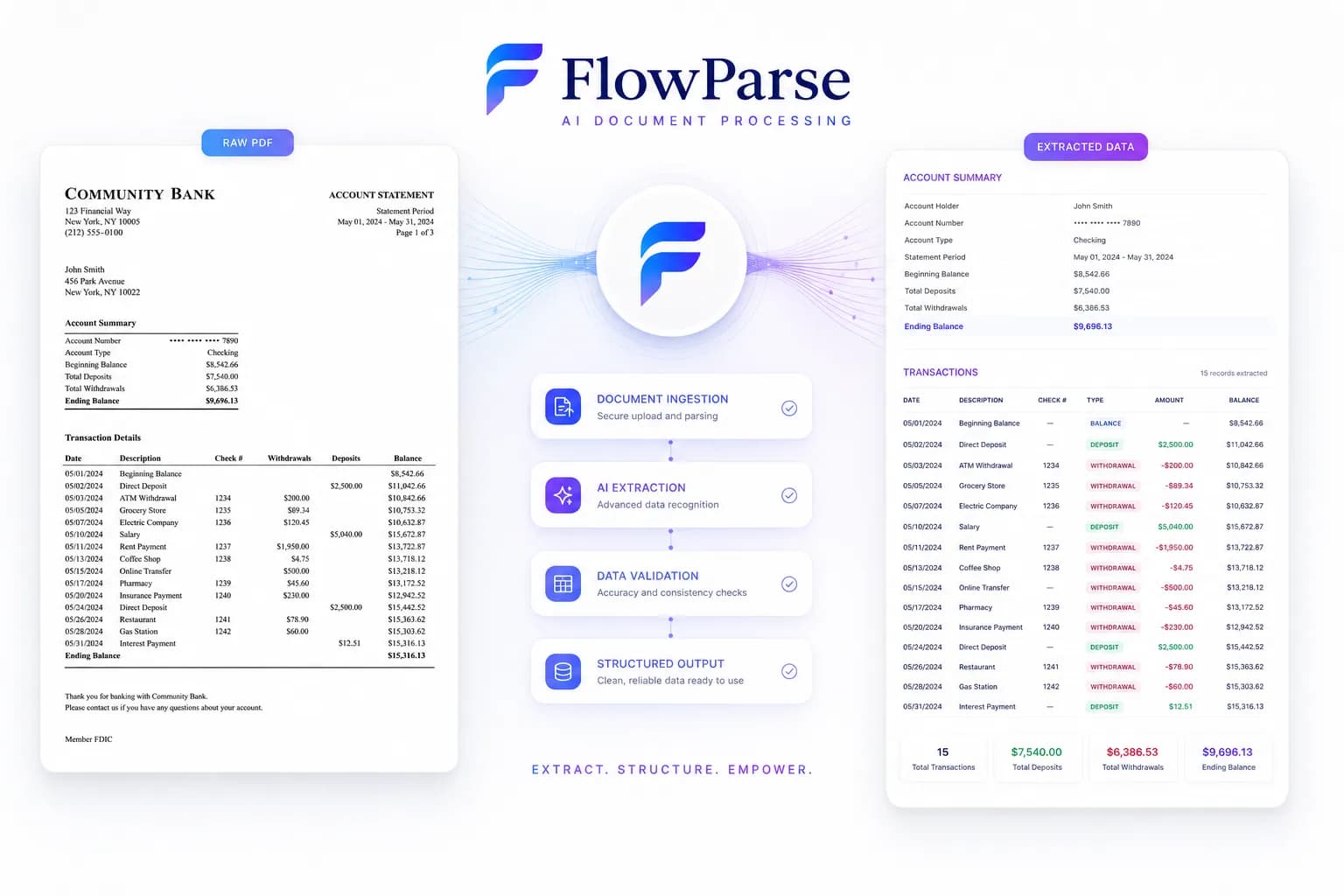
A clean parse is a great start — but between 'fields returned' and 'usable in the books' sit several layers. On a bank statement: reconstructing the transaction list across page breaks, merging separate debit and credit columns into one signed value, parsing day-first versus month-first dates, and confirming that opening balance plus every transaction equals the closing balance so nothing was dropped. Then a human needs a way to review and correct the uncertain rows, and the result needs to leave as a file the accounting software will import.
With Mindee you build those layers in your product and maintain them. FlowParse ships them: the same engine that parses also normalises, validates and scores the data, offers the editable grid for review, consolidates multiple statements, and exports the accounting files — with the scanned-document path running through the same bank statement OCR API. That's the difference between an API that returns fields and a tool that returns a finished result.
The accounting export gap
A parsing API returns fields; turning them into a file your accounting software imports is your integration to build and keep working. FlowParse produces real Open Financial Exchange files out of the box: `.QBO` and `.QFX` for QuickBooks and Quicken, `.OFX` for tools like GnuCash and Sage, plus a Xero-ready CSV and clean Excel. Each transaction carries a stable `FITID`, which is what stops a re-import double-posting rows the user already has.
That's engineering you don't have to do on top of Mindee — and don't have to keep working as formats evolve. The accounting export feature and the PDF to QBO page show the full format list and the exact import steps into each tool.
| Layer | Mindee | FlowParse |
|---|---|---|
| Document parse (fields) | Yes (API) | Yes |
| Transaction reconstruction | Build it yourself | Built in |
| Balance validation + score | None | Built in |
| Consolidate many statements | Build it yourself | Smart Merge |
| .QBO/.QFX/.OFX/Xero files | Build it yourself | Native |
An app for the people who aren't developers
Mindee is, by design, an API for developers — which is perfect if a developer is embedding it, but a wall if the person who needs to convert a statement is an accountant or an operations manager. They can't call an endpoint; someone has to build them a UI first.
FlowParse is both. A non-developer opens the bank statement to Excel tool, uploads, reviews and exports — no code — while a developer automates the identical capability over REST, billed per page. When you're ready to automate, the bank statement API and document extraction API cover it, with the parsing guide walking through the pattern. One tool serves both audiences instead of forcing everything through code.
Pricing, privacy and getting started
On price, Mindee bills per document or API call, and you build the surrounding workflow in your product — so the parse is only part of the true cost. FlowParse is per page drawn from a balance, with a free monthly allowance and no signup required to try it; because the workflow is finished and an app is included, there's far less to build around it. See the pricing page for plans, and usage is visible per API key so cost is predictable and attributable.
On privacy, FlowParse processes in EU data centres, deletes the original PDF immediately after extraction, stores extracted data encrypted, and never trains models on your documents — details on the security page. Getting started is the easy part: convert a document free in the app, then get an API key to automate the same capability.
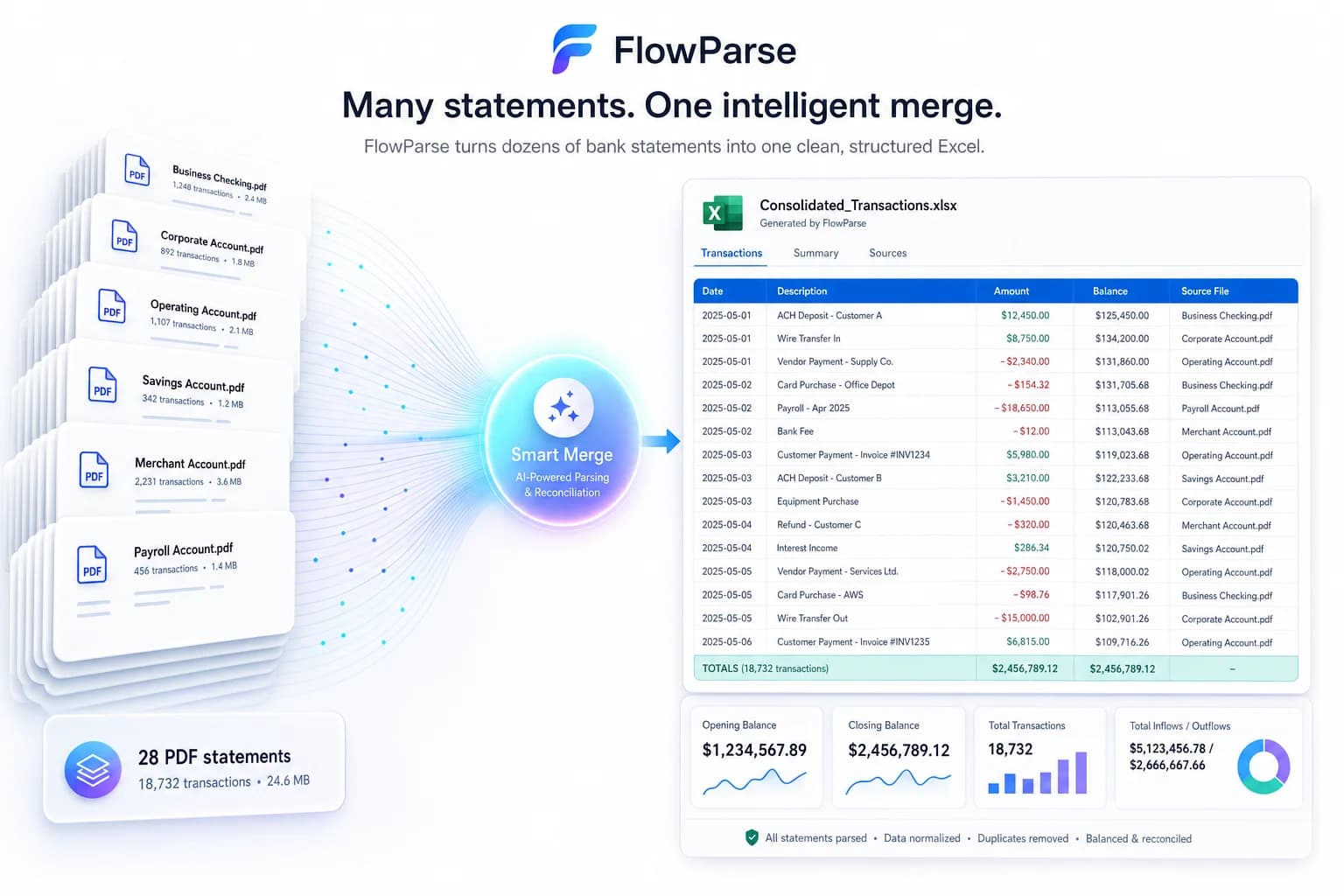
One engine for statements, invoices and receipts
Choosing a finance-focused tool doesn't narrow you to one document. FlowParse extracts bank statements, invoices and receipts with full line items, supplier and buyer details, totals and a tax breakdown, and runs an AI VAT auditor on invoices — all on the same pre-trained engine, all in a consistent schema.
Because everything comes back in the same shape, cross-document workflows are built in rather than assembled: an invoice you extract can be reconciled against the bank payment you extracted from a statement, with no mapping between separate API calls. On Mindee, joining a parsed invoice to a parsed statement payment is logic you write.
Where Mindee's strength is a clean, general parsing API with a custom builder, FlowParse's strength is that the financial set is already solved, validated and tied together — and usable without writing a product around it.
A real-world scenario: a bookkeeping app that just shipped faster
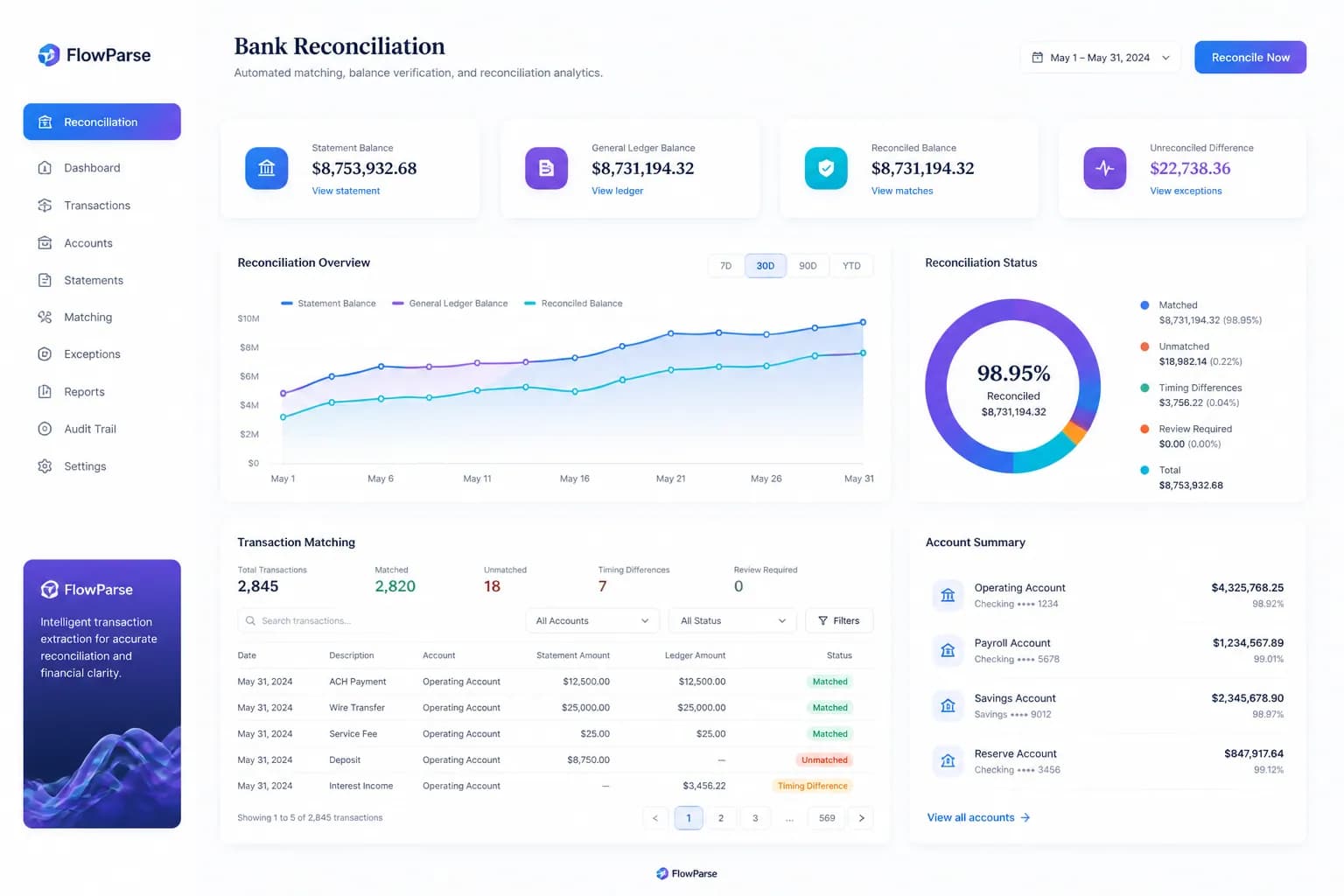
Picture a small bookkeeping SaaS that reached for Mindee to add statement import. The parse worked well — and then the roadmap filled with the surrounding work: reconstructing transactions, a balance check so support wasn't fielding 'my import is off by a bit', a review screen for the uncertain rows, a consolidation feature for clients who upload a year at once, and exporters for QuickBooks and Xero. Each of those was a sprint, and each needed maintaining.
With FlowParse's API, most of that arrived finished: one call returns validated transactions, Smart Merge handles the year-at-once upload, the validation score gates the questionable ones, and native QBO/QFX/OFX/Xero export means the team didn't write a single exporter. They shipped the feature in a fraction of the time.
The lesson is one of scope — Mindee is an excellent parsing API, and if you're building broad document capture with bespoke types its custom builder is the right tool. But for a product whose need is the financial workflow, starting from an engine that already includes validation, consolidation and export gets you to shipped far sooner.
Where Mindee genuinely wins
A fair comparison names where the other tool is the better choice, and for Mindee that's the developer experience and the flexibility to go beyond finance. Mindee is built for engineers: clean SDKs, clear docs, a predictable REST contract and a custom document builder that lets you train an extractor for a document type no off-the-shelf API understands. If you're composing document capture into your own product across several document types — some financial, some not — that breadth and that developer ergonomics are a real advantage.
There's also the case where you specifically want a parse, not a workflow. If your product already has its own validation, its own review UI and its own export logic — or your documents don't need any of that — then the finished layers a finance tool bundles are weight you don't need, and a clean parsing API you drop into an existing pipeline is the leaner fit. A team with a mature document platform may prefer to own those layers rather than adopt an opinionated finished tool.
FlowParse makes the opposite bet on purpose: it's opinionated and finished for financial documents, and it doesn't offer a general custom-model builder for arbitrary types. The honest division is straightforward — if you want a flexible parsing API to build a bespoke product on, especially across mixed document types, Mindee fits; if your documents are financial and you want the validation, consolidation and accounting export already built, plus an app for non-developers, FlowParse fits. Plenty of teams use a general API for the miscellany and a specialist for the financial backbone.
Total cost of ownership, not just per-document price
Comparing a parsing API with a finished workflow on per-document price alone misses where the cost lives. With Mindee, the parse meter is one line item: the validation, reconciliation, consolidation, review UI and accounting export you build around it in your product take engineering time and keep needing maintenance — and building an end-user app on top is a project of its own. That surrounding work is the true, recurring cost of building on a parse.
FlowParse's total cost of ownership is close to its per-page price because the workflow and the app are already built. The model is pre-trained, so a new bank or vendor format just works; validation, consolidation and accounting export ship in the box; and non-developers can use it without any UI work from you. For financial documents specifically, that turns a build-and-maintain roadmap into a line on a usage report.
This is the heart of the build-versus-buy decision. If you're a developer who wants a clean parsing API to compose into a bespoke product — especially across non-financial documents — Mindee is the right tool. If your need is the finished financial workflow, paying to build the layers around a parse means paying to recreate what a finance-specific engine already includes, app and all.