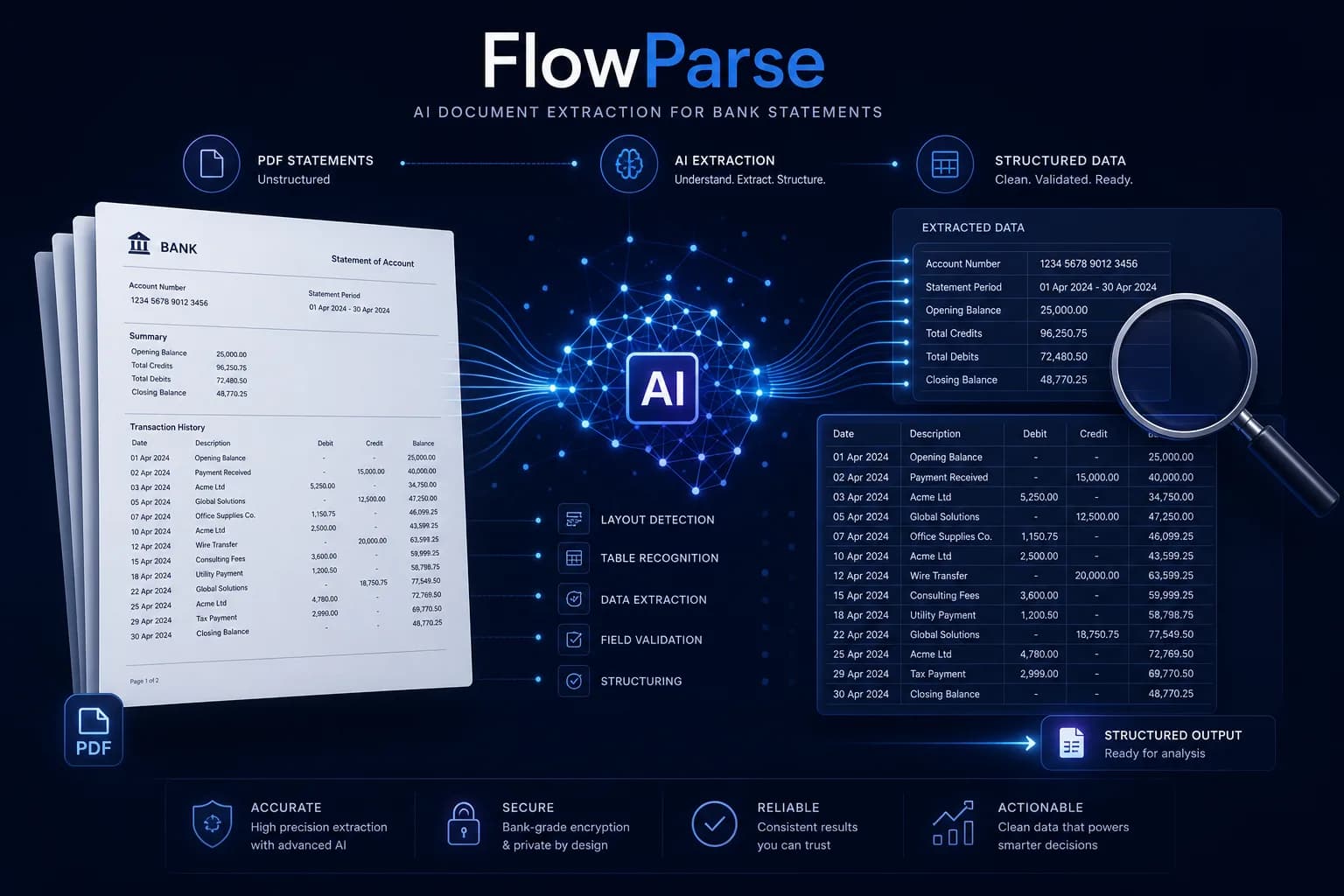

A Reducto Alternative
An Accurate Read Is Not A Proven Statement
Reducto is a document ingestion API that reads hard documents well — dense tables, awkward layouts, the pages that defeat plain text extraction — and returns structured output for your pipeline. FlowParse is the finished financial layer above that: signed transactions checked against the statement's own closing balance, Smart Merge, an editable review grid and native QBO/QFX/OFX/Xero export, as an app and an API.
Engineering teams that need high-fidelity ingestion across complex, varied documents and will build the domain logic, validation and export their product requires.
Teams whose documents are financial and who want the finished result — validated, importable data — rather than a very good read they still have to finish.
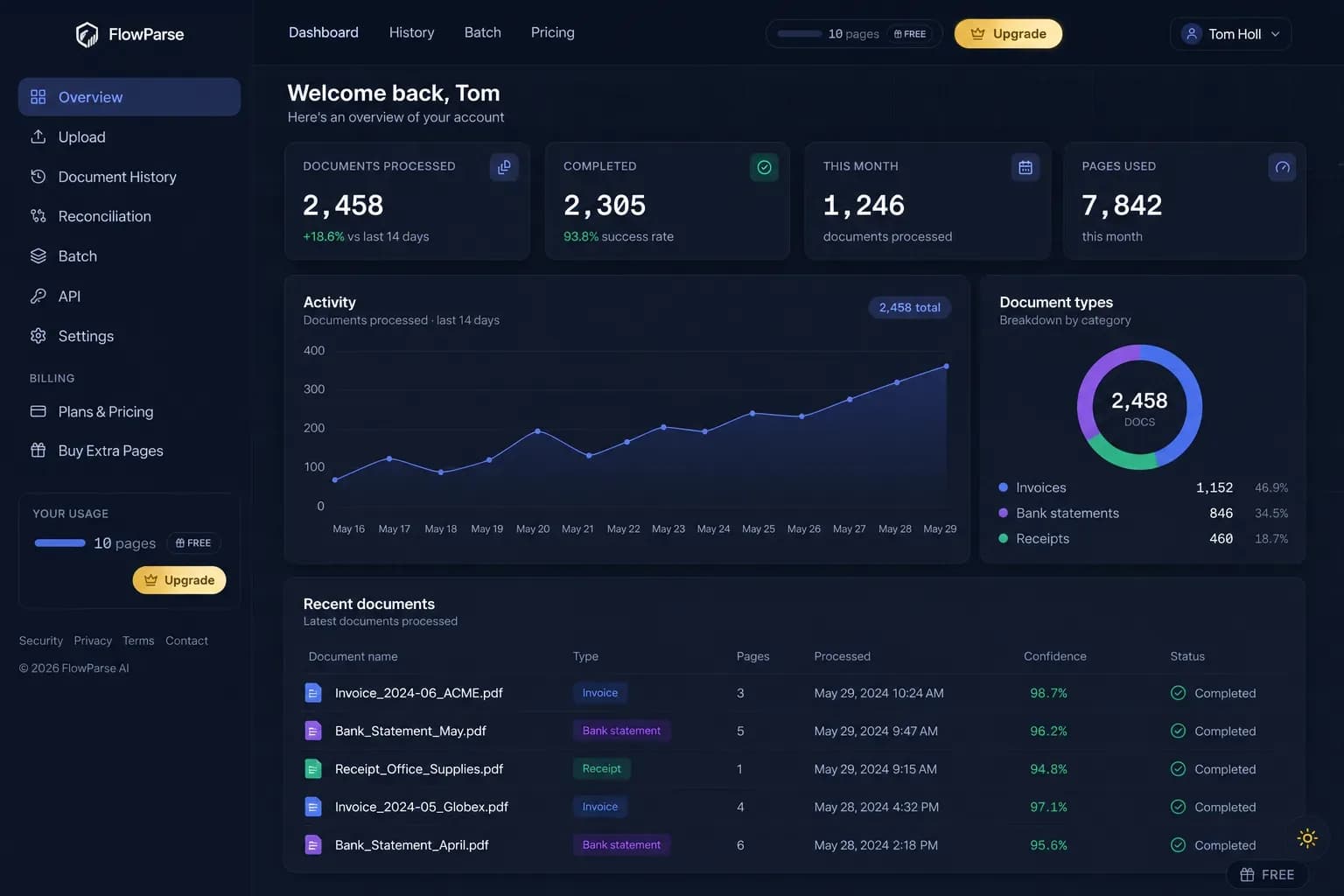
Why Businesses Look for Reducto Alternatives
Proof, not just accuracy
A balance check confirms the extraction is complete — accuracy alone cannot tell you that.
Financial semantics built in
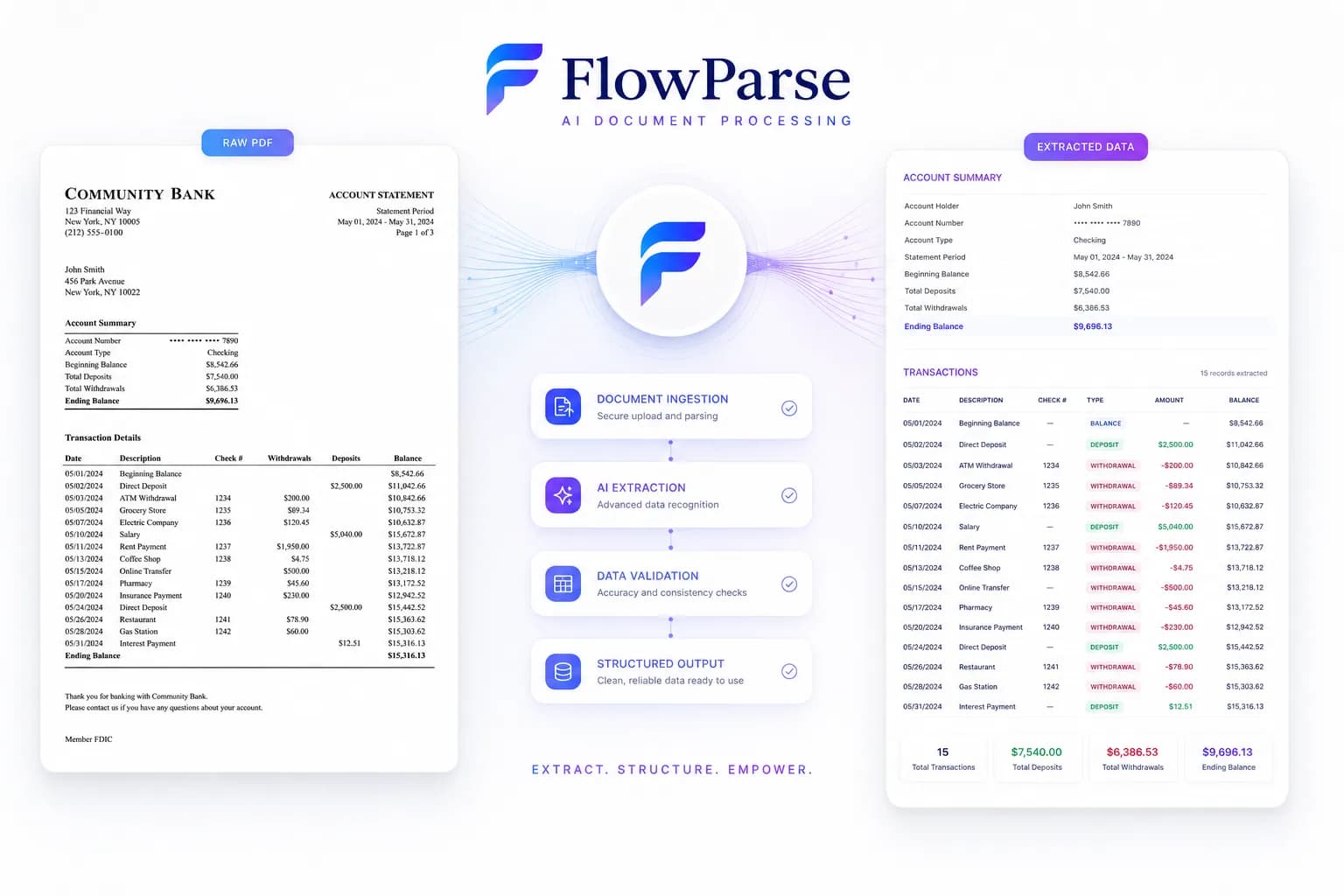
Debits and credits become one signed amount; dates are normalised; wrapped descriptions rejoined.
Accounting-ready export
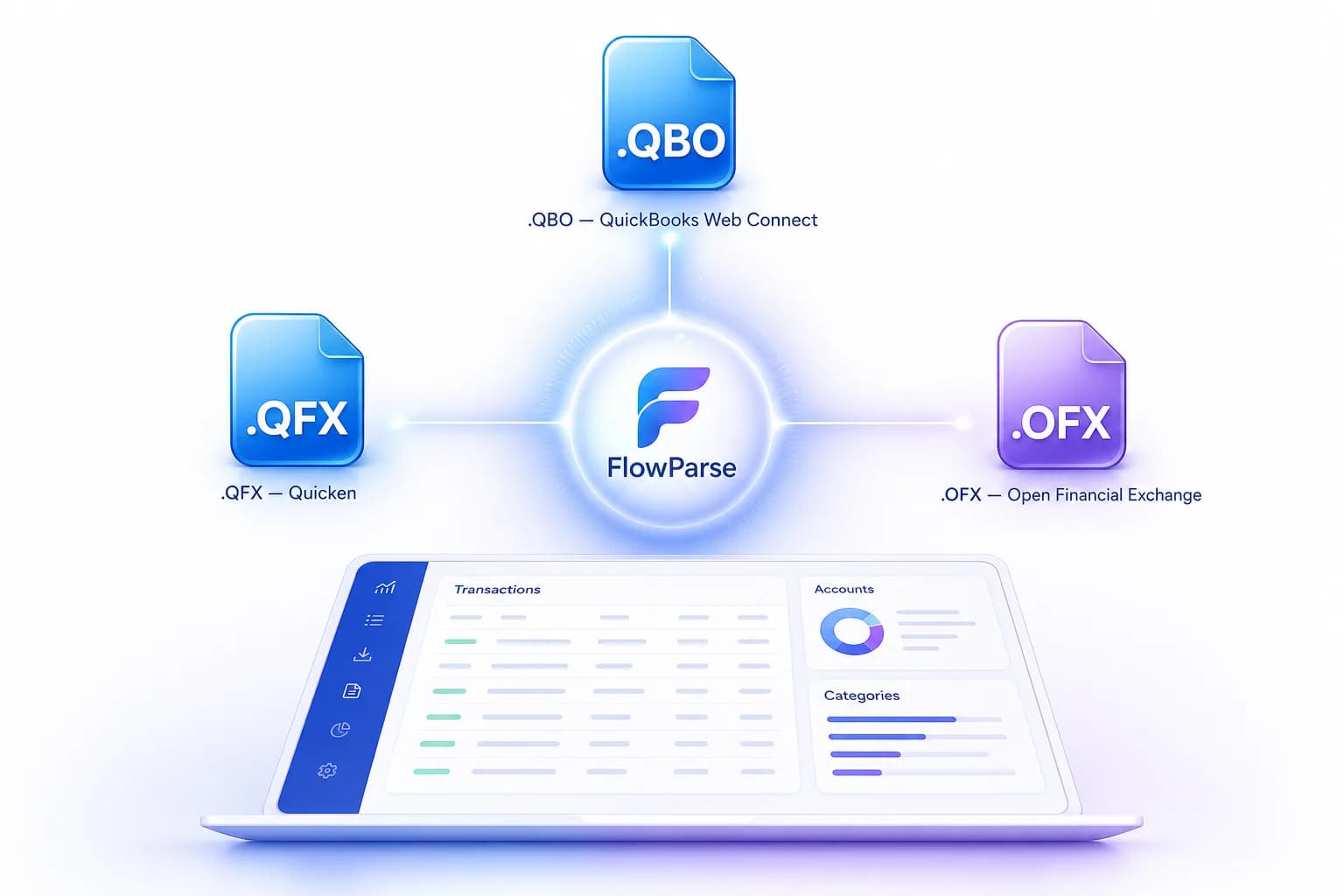
Native .QBO/.QFX/.OFX and Xero/Excel files — the actual destination of financial data.
An app, not only an API
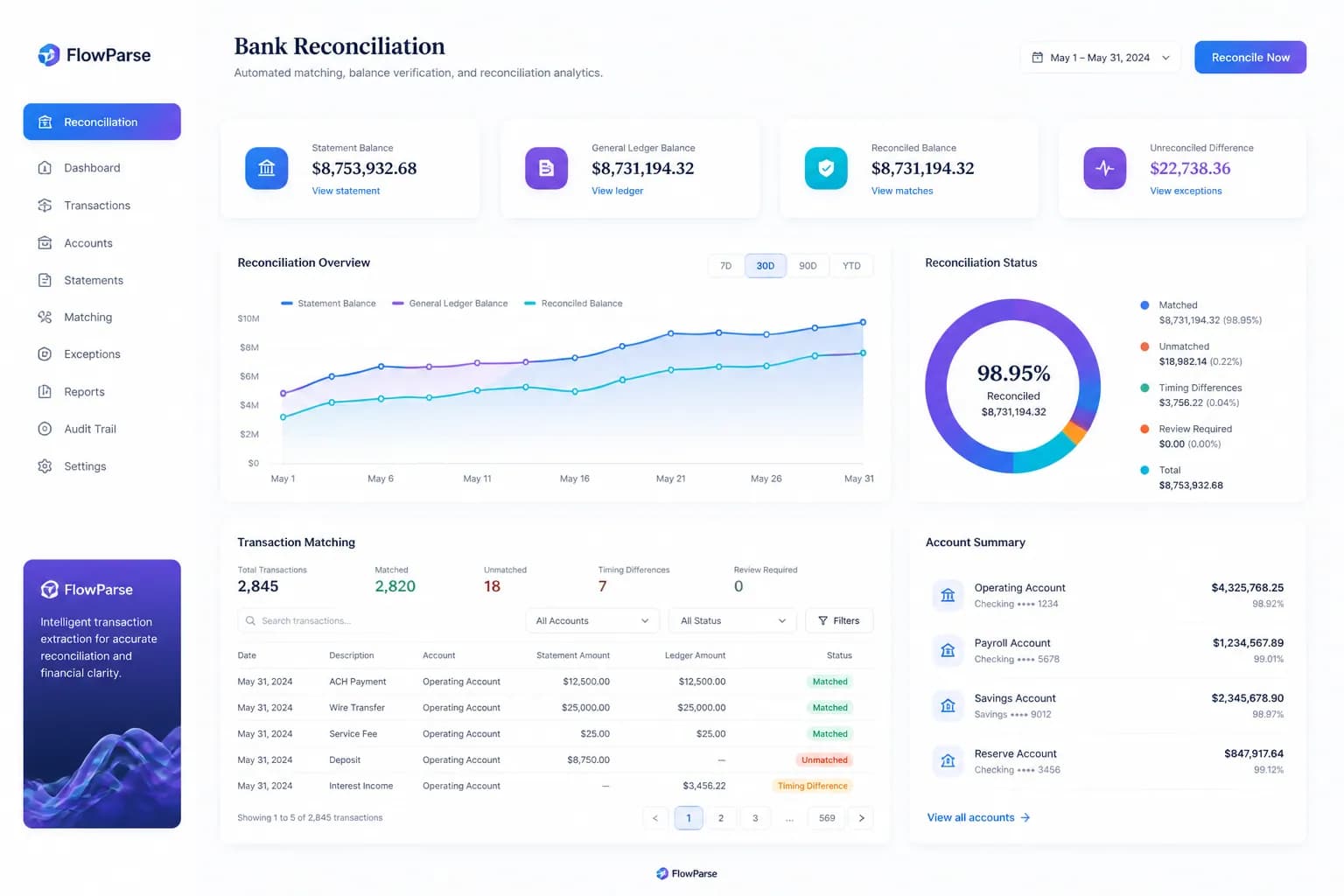
Non-developers convert and review a statement in the browser, no pipeline required.
Consolidation built in
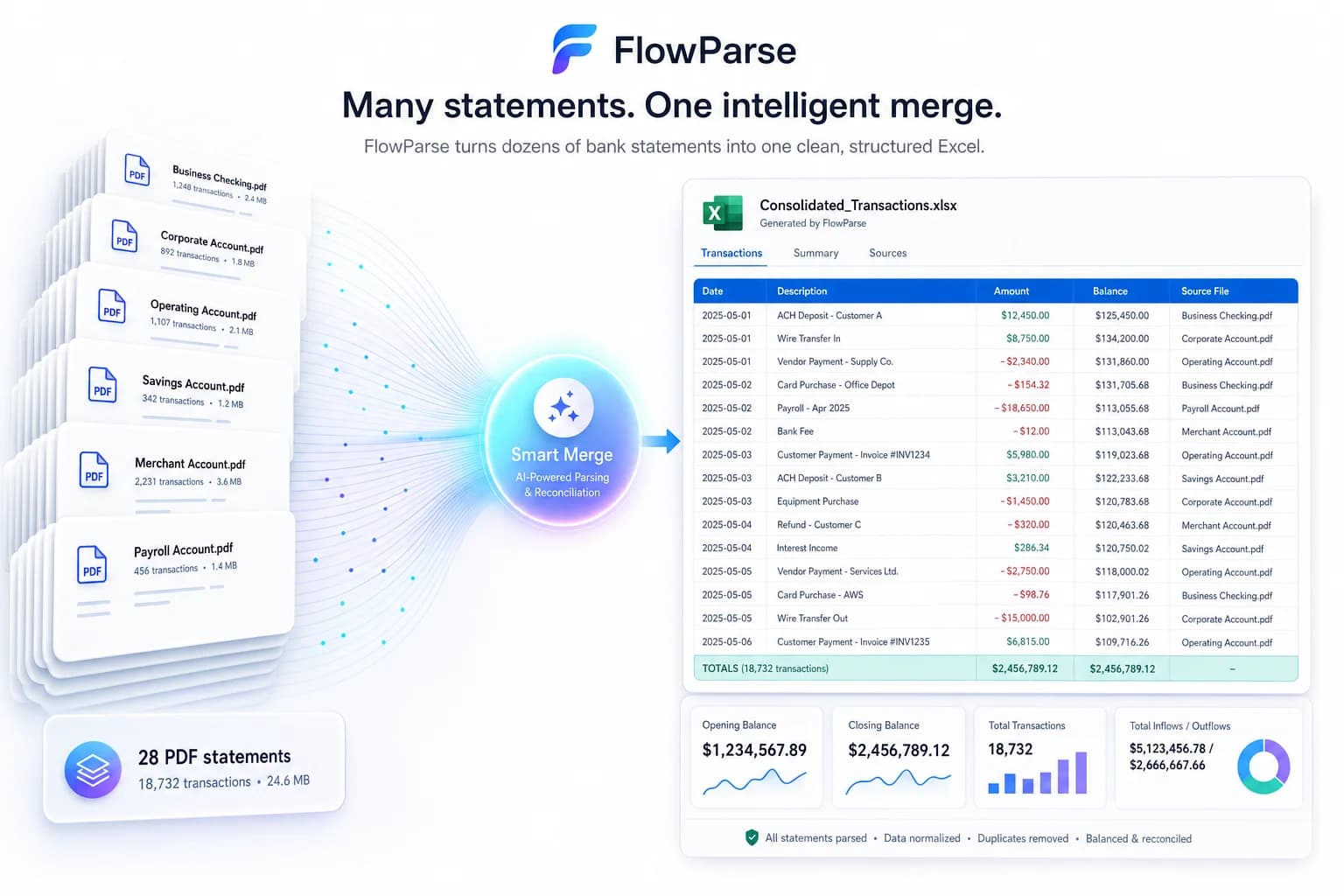
Smart Merge turns a year of PDFs into one reconciled Excel — a workflow, not an ingest.
Self-serve and free to start
Run a real statement through the whole flow today, with a free monthly allowance.
Quick Comparison — Reducto vs FlowParse
A feature-by-feature look at Reducto and FlowParse.
| Feature | Reducto | FlowParse |
|---|---|---|
| Complex document / table ingestion | Yes | Strong (financial layouts) |
| PDF → typed, signed transaction rows | Structured output you interpret | Yes |
| Debit/credit → single signed amount | Build it yourself | Yes |
| Balance reconciliation + quality score | No | Yes |
| Native .QBO / .QFX / .OFX export | No | Yes |
| Xero / Excel / CSV export | Build it yourself | Yes |
| Smart Merge — 100 PDFs → 1 Excel | No | Yes |
| Self-serve app for non-developers | No | Yes |
| Editable review grid for humans | Build it yourself | Yes |
| Any document type | Yes | Financial set only |
| REST API | Yes | Yes |
| Free tier | Trial/credits | Free pages/month + no-signup try |
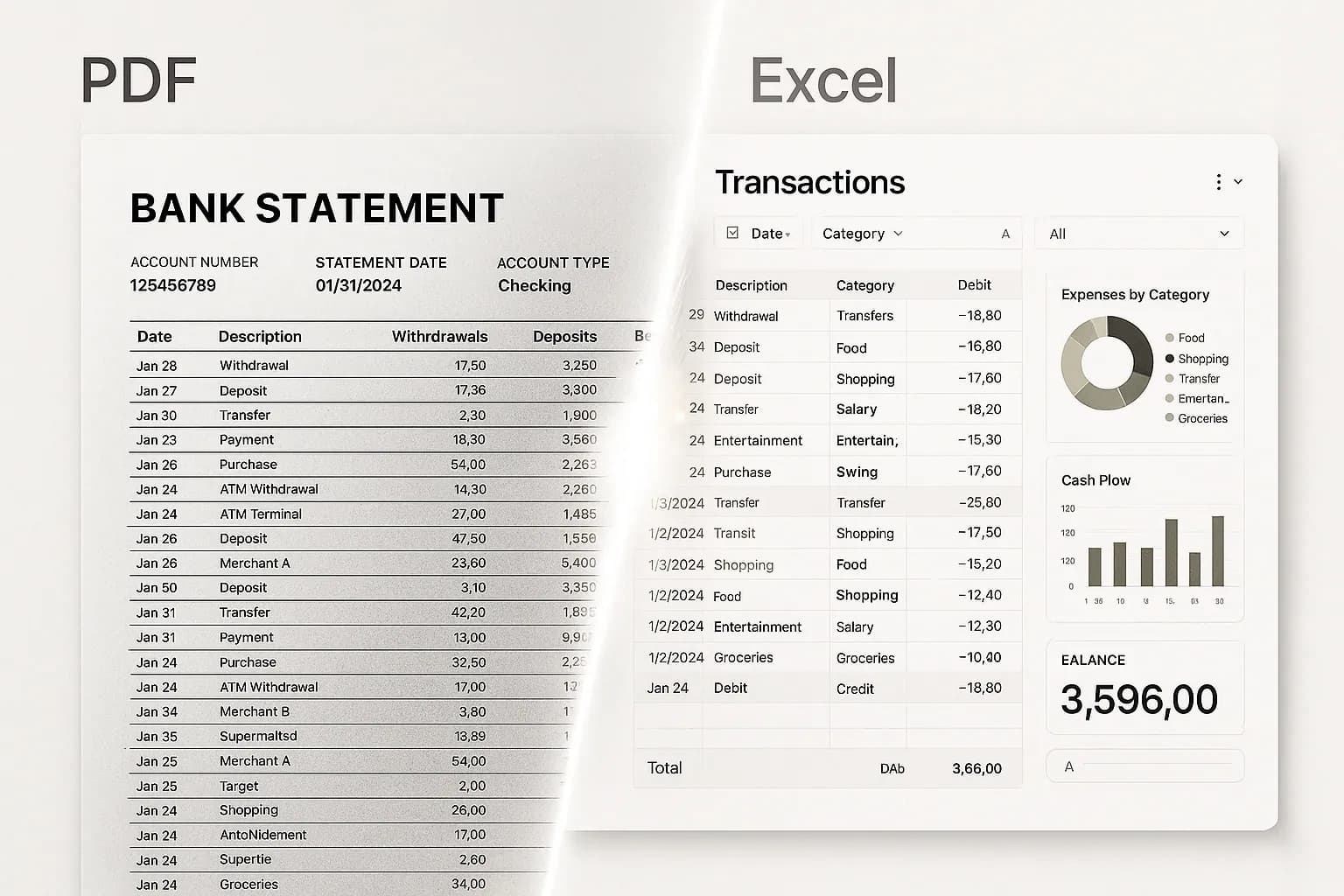
What Is Reducto?
Reducto is a document ingestion API aimed at the documents that break everything else. Its pitch is accuracy on genuinely hard material — dense financial tables, multi-column layouts, footnoted pages, the scans that plain text extraction turns into soup — using a vision-led approach rather than hoping the PDF's text layer is honest. It returns structured output for your pipeline, and for teams whose documents are complicated, that fidelity is a real advantage and the reason they choose it over a general OCR primitive.
But accuracy and completeness are different properties, and financial data needs both. Reducto can read a bank statement's table beautifully and still hand you something that is missing three transactions — because if a row was dropped at a page break, nothing in a structured read announces it. The output looks impeccable. Every figure it did return is correct. That is precisely what makes the gap dangerous: there is no visible defect to catch. And past that sit the domain steps — merging debit and credit columns into one signed value, normalising dates, rejoining wrapped descriptions, consolidating a year of statements, and producing a file QuickBooks or Xero will import — all of which live in your product.
FlowParse is the finished layer for that specific family. It is pre-trained on [bank statements](/bank-statement-converter), [invoices](/invoice-parser) and [receipts](/receipt-scanner), returns typed signed transactions, and — the part that matters — [tests the statement against itself](/features/validation-engine): opening balance plus every transaction must equal the closing balance the bank printed. Around that sit the [editable review grid](/features/editable-preview), [Smart Merge](/merge-pdf-to-excel) and native [accounting export](/features/accounting-software-export), in an app as well as an API.
Reducto strengths
- Strong accuracy on complex layouts and dense tables
- Vision-led approach that does not depend on a clean text layer
- Handles any document type, not just financial ones
- Clean ingestion API that drops into an existing pipeline
Where teams want something different
- Accuracy without an arithmetic completeness proof — a dropped row still looks clean
- No debit/credit normalisation, consolidation or accounting export
- Domain logic and review UI are yours to build and maintain
- API only — no self-serve app for a non-developer
Why Teams Switch to FlowParse
A proof, not a confidence score
Opening + transactions = closing is arithmetic. It catches what confidence cannot.
Financial meaning included
Signed amounts, normalised dates and rejoined descriptions come back finished.
Statements to a real bank feed
Export .QBO/.QFX/.OFX (OFX 1.0.2, FITID de-dup) so imports never double-post.
Consolidate a year at once
Smart Merge combines up to 100 statements into one reconciled Excel.
An app for the non-developers
Accountants convert and review in the browser — no pipeline, no code.
Free to evaluate
Run a real statement through the whole flow before committing anything.
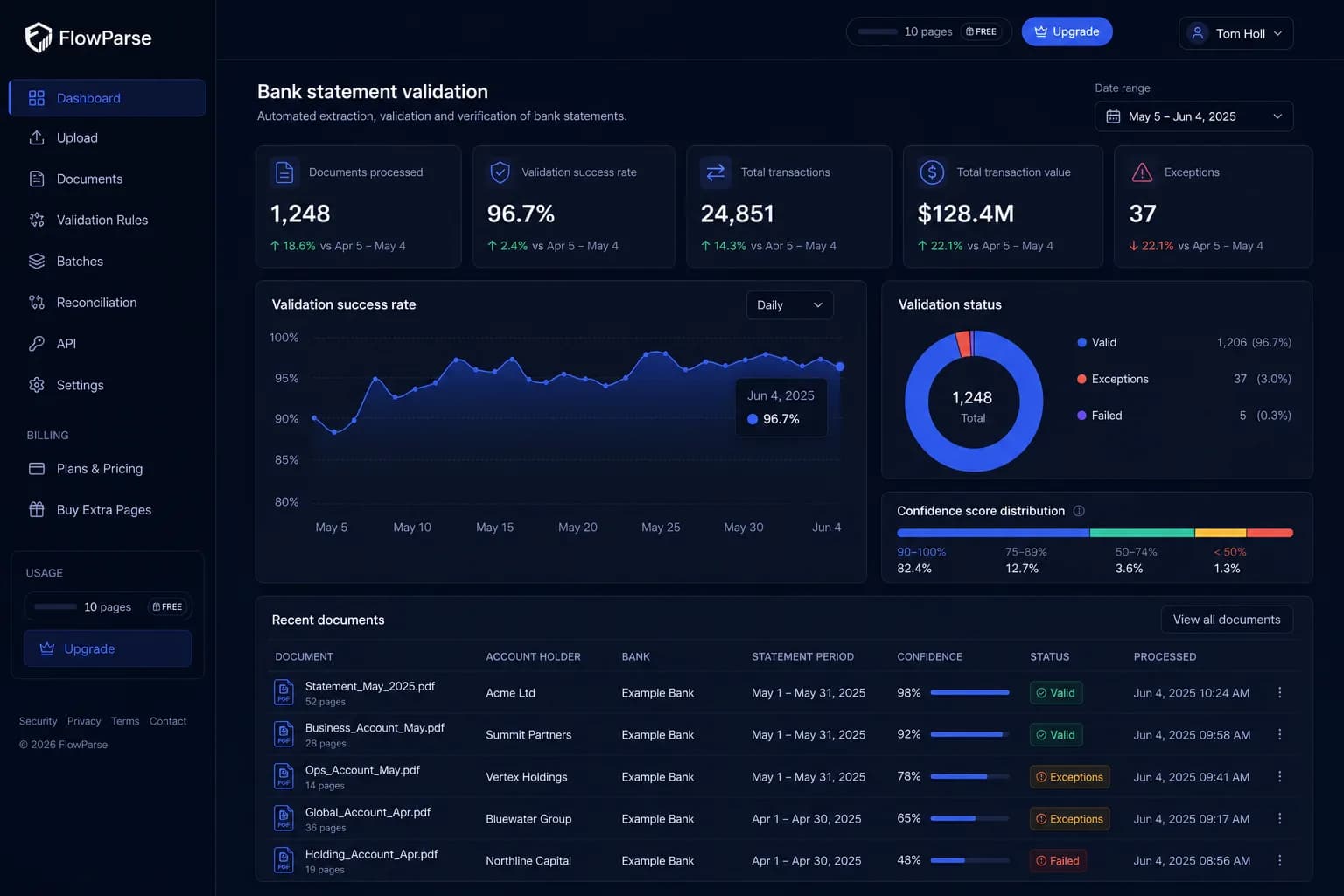
Accurate read vs proven statement
Reducto reads the page well. FlowParse proves the statement is whole and sends it where it is going.
Reducto path
- Ingest the document accurately
- Interpret the structured output
- Build debit/credit + date logic
- Build validation + consolidation
- Build export + a review UI yourself
FlowParse path
- Upload, or make one API call
- Typed, signed transactions returned
- Balance check proves completeness
- Editable review for the uncertain rows
- Export native QBO/QFX/OFX/Xero/Excel
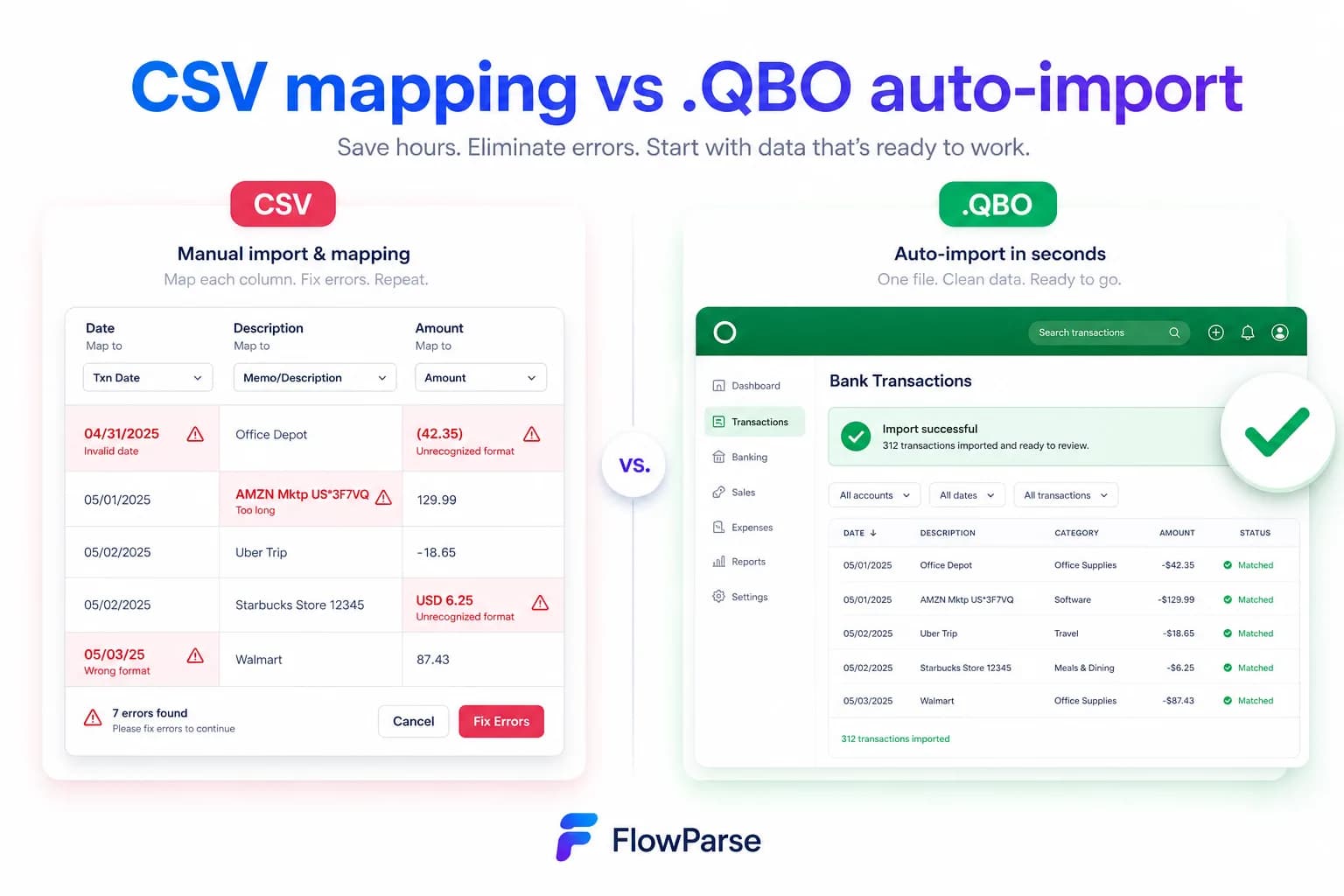
Pricing Comparison
How the cost and commitment models compare.
| Feature | Reducto | FlowParse |
|---|---|---|
| Free tier | Trial / credits | Free pages/month + no-signup try |
| Model | Per page ingested | Per page from a balance |
| Self-serve app | No (API) | Yes (browser app) |
| Accounting-export files | Build it yourself | Yes (QBO/QFX/OFX/Xero) |
| Validation included | No | Yes (balance + score) |
| Setup to first result | API integration | None (app) / one call (API) |
Accuracy Comparison
Both platforms use modern AI OCR — here is how extraction quality is assured.
| Feature | Reducto | FlowParse |
|---|---|---|
| Complex tables and layouts | Excellent | Strong (financial layouts) |
| Bank statement transactions | Structured read | Every row, balance-validated |
| Completeness proof | No | Arithmetic balance check |
| Debit/credit normalisation | Build it yourself | Single signed amount |
| Quality score to gate on | Confidence only | 0-100 validation score |
| Human review step | Build it yourself | Editable grid + API |
Who should choose Reducto?
- Engineering teams ingesting complex, varied documents
- Products that need high fidelity across many document types
- Pipelines where domain logic already exists in-house
- Teams that want an ingestion primitive, not an opinionated tool
Who should choose FlowParse?
- Accountants and finance teams converting statements and invoices
- Developers who need validated financial rows plus export from one call
- Teams that must prove an extraction is complete, not just accurate
- Anyone wanting a free, self-serve way to convert a document today
Migrating from Reducto to FlowParse
Switching takes minutes — there are no templates to rebuild or models to retrain.
Export your documents
Export invoices and statements from Reducto or your source.
Upload to FlowParse
Drag and drop PDFs, scans, or images — no setup.
Review extracted data
Check fields in the editable preview before export.
Export Excel or CSV
Download structured data for your accounting system.
Automate workflows
Use the API and integrations for future documents.
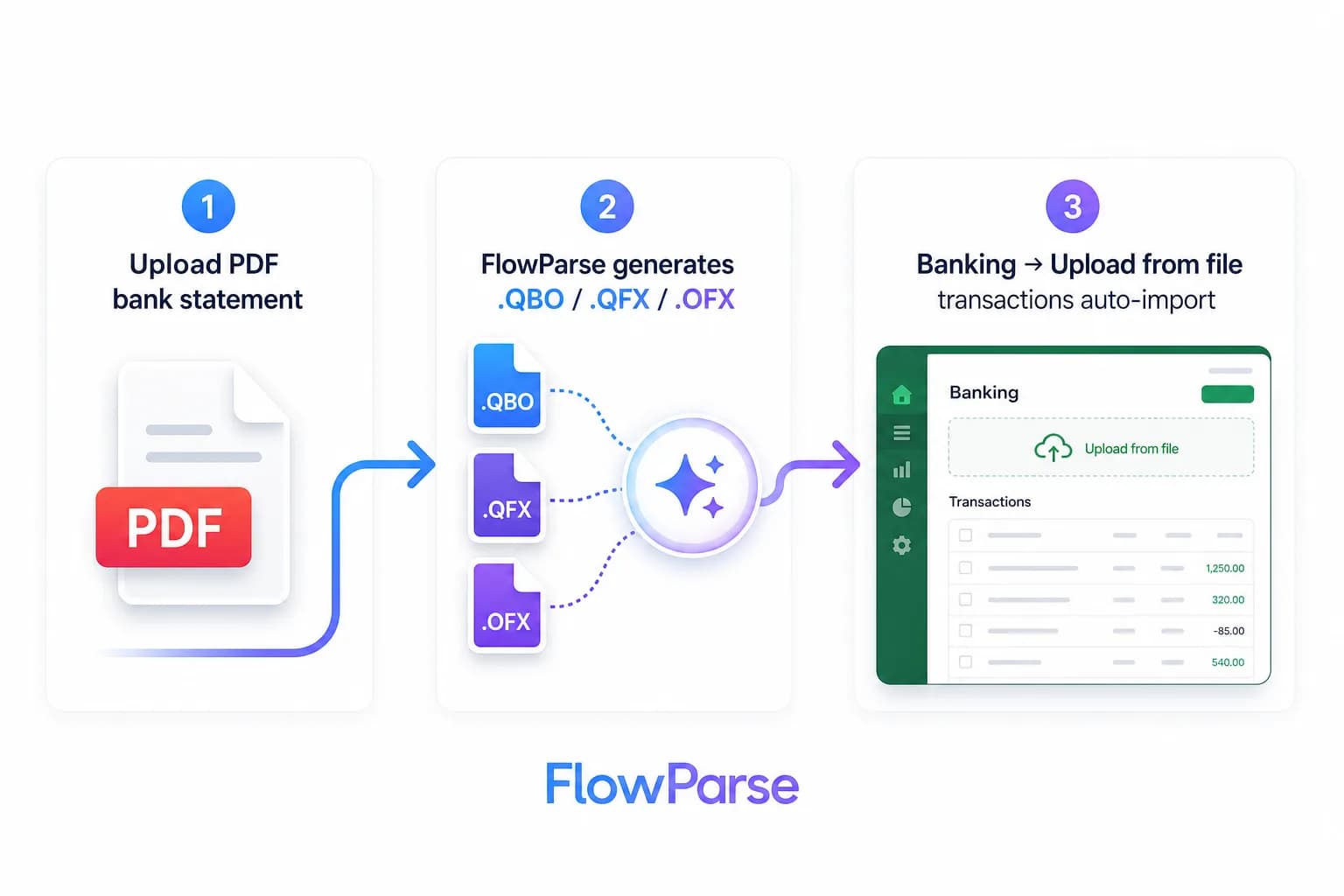
Reducto vs FlowParse: reading the page vs proving the statement
Reducto's core claim is accuracy on hard documents, and it is a good claim to make — most extraction failures really are reading failures, and a vision-led ingest that does not trust a mangled text layer solves a large share of them. If your documents are complex and varied, that is exactly the primitive you want, and FlowParse is not competing for that job.
FlowParse's claim is different, and it sits one level up. For financial documents, reading the page correctly is necessary but not sufficient, because the question an accountant is actually asking is not 'did you read these rows right?' but 'are these all the rows?'. Those are separate questions, and only one of them can be answered by reading more carefully. FlowParse answers the second by testing the statement against its own closing balance — arithmetic, not confidence.
So the honest framing is not accuracy versus inaccuracy. It is a primitive versus a finished domain tool: Reducto hands your pipeline an excellent read of whatever you send it; FlowParse hands you signed transactions, a completeness proof, a review grid, consolidation and a QBO file — for financial documents only, because that specificity is what makes the proof possible.
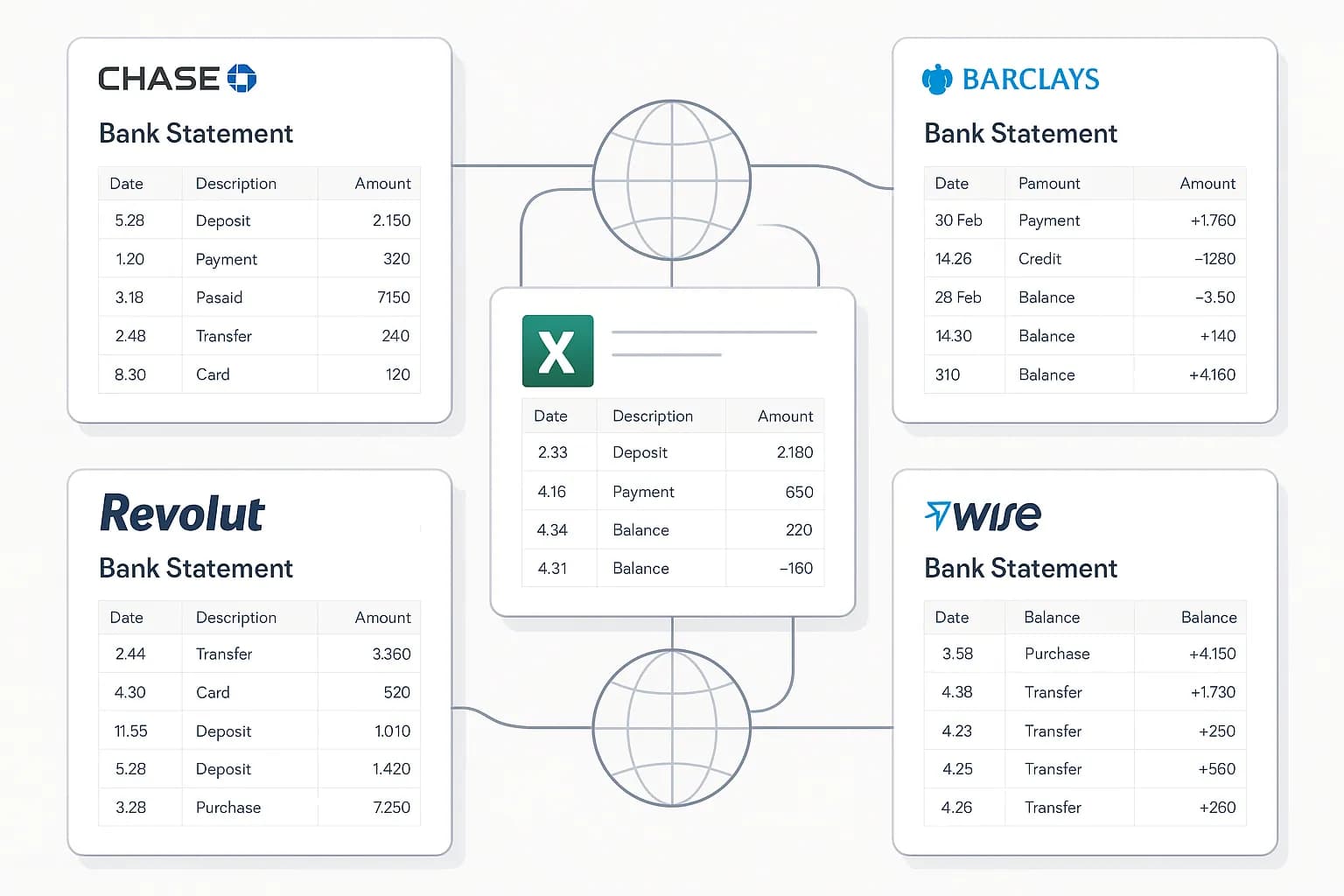
The failure mode accuracy cannot catch
Picture the worst realistic outcome of a very accurate extraction. A statement runs across six pages. Somewhere on page four, a transaction that straddles a page break is not returned. Every other row is perfect — the amounts, the dates, the descriptions, all exactly right, all with high confidence.
Now what? The output has no defect to find. There is no low-confidence flag, because the model was not unsure about a row it never emitted. There is no formatting anomaly. A reviewer scanning the data sees a clean, plausible statement. The error is invisible by construction, and it flows into the books, where it surfaces weeks later as a reconciliation that will not tie by a specific and mysterious amount.
This is why FlowParse treats the closing balance as evidence rather than as another field. Opening balance plus every transaction extracted must equal the closing balance the bank printed. If it does not, something was missed — and the response says so, names the rows around the break, and scores the document 0-100 so a pipeline can reject it automatically. It is the only check that can prove an extraction wrong with no labels and no human, which is exactly the situation you are in when nobody knows what the statement should have said.
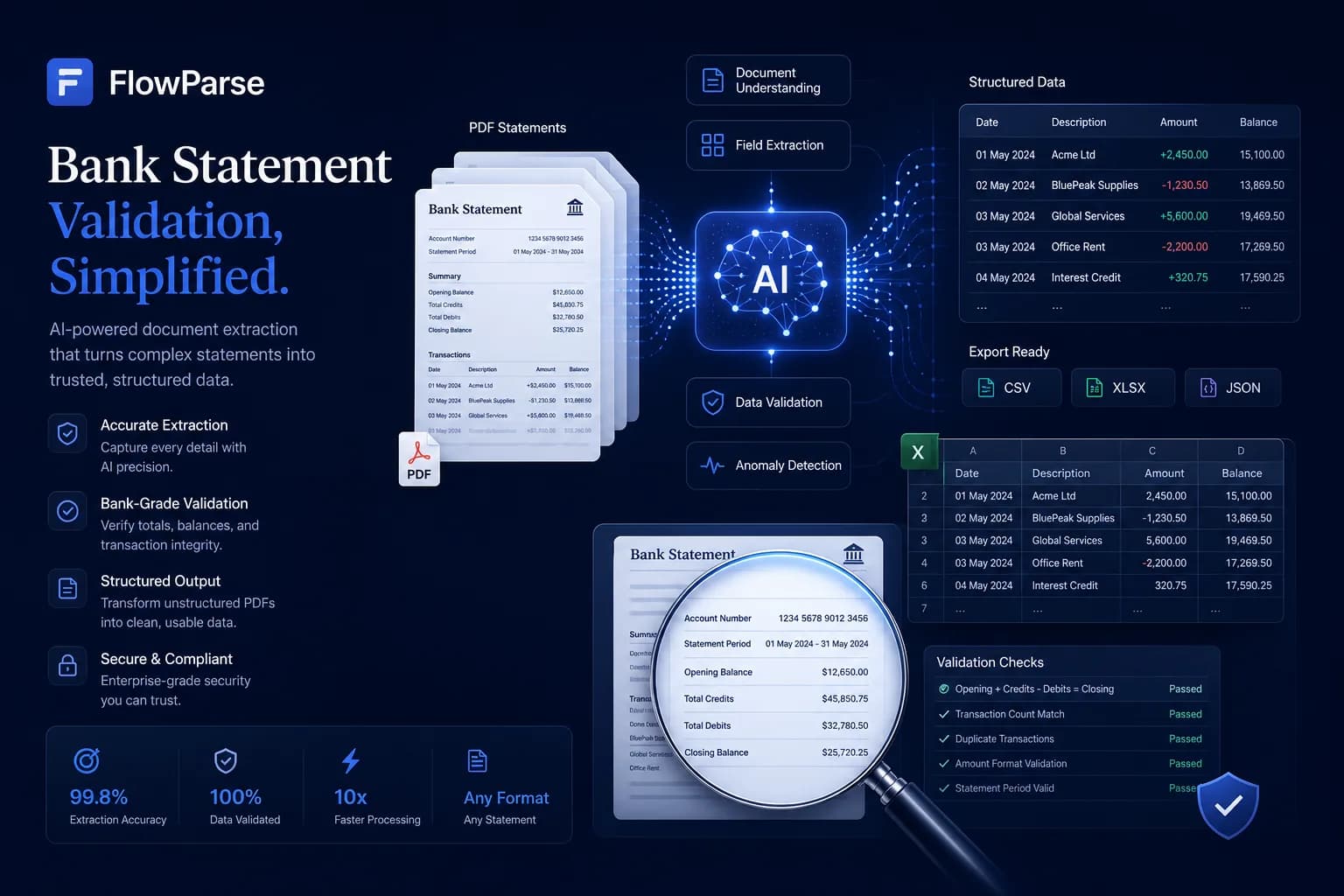
The domain layers past the read
Even a flawless read leaves distance between output and usable financial data. Separate debit and credit columns have to become one signed value — and getting the sign wrong is the single most consequential bug in this domain, because the total still looks like a number. Dates have to be disambiguated per locale. Descriptions that wrap across lines must be rejoined or the payment reference is truncated. A year of statements has to be merged into one dataset without duplicating the overlapping month. And the result has to leave as a file accounting software imports.
With an ingestion API, every one of those is yours, and each is a place where a subtle bug quietly corrupts a customer's books. FlowParse ships them: the same engine that reads also normalises, validates and scores, offers the editable grid for review, consolidates up to 100 statements, and writes the accounting files — with scans handled through the same bank statement OCR API.
| Layer | Reducto | FlowParse |
|---|---|---|
| Accurate read of a hard page | Excellent | Strong (financial) |
| Debit/credit → signed amount | Build it yourself | Built in |
| Completeness proof | None | Balance check |
| Consolidate many statements | Build it yourself | Smart Merge |
| .QBO/.QFX/.OFX/Xero files | Build it yourself | Native |
| Review UI for humans | Build it yourself | Editable grid |
The accounting export gap
An ingestion API returns structured output; turning it into a file your accounting software imports is your integration to build and keep working. FlowParse produces real Open Financial Exchange files out of the box: `.QBO` and `.QFX` for QuickBooks and Quicken, `.OFX` for tools like GnuCash and Sage, plus a Xero-ready CSV and clean Excel. Each transaction carries a stable `FITID`, which is what stops a re-import double-posting rows the user already has.
That is engineering you neither write nor maintain as formats change. The accounting export feature and the PDF to QBO page list every format and the exact import steps into each tool.
An app for the people who aren't developers
Reducto is an API for engineers, which is right for its audience and a wall for the accountant who has twelve PDFs and a deadline. They cannot call an endpoint; someone has to build for them first.
FlowParse is both. A non-developer opens the bank statement to Excel tool, uploads, reviews and exports — no code — while a developer automates the same capability over REST, billed per page. The bank statement API and document extraction API cover the programmatic path, with the parsing guide walking through the pattern.
One engine for statements, invoices and receipts
Choosing a finance-focused tool does not narrow you to one document. FlowParse extracts bank statements, invoices and receipts with full line items, supplier and buyer details, totals and a tax breakdown, and runs an AI VAT auditor on invoices — all on the same pre-trained engine, in a consistent schema.
Because everything comes back in the same shape, cross-document workflows are built in rather than assembled: an invoice you extracted can be reconciled against the bank payment you extracted from a statement, with no mapping between separate API calls. On an ingestion primitive, joining a read invoice to a read statement payment is logic you write and own.
Where Reducto's strength is fidelity across anything you send it, FlowParse's is that the financial set is already solved, validated and tied together.
A real-world scenario: the extraction that was 99% right
Consider a lending product that ingests applicant bank statements to assess affordability. It runs on a high-accuracy ingestion API, and the accuracy is genuinely excellent — spot-check any statement and the figures are right. The team is satisfied, because every test they can think of passes.
Then a decision goes wrong. An applicant is approved on an income that turns out to be overstated, and the post-mortem finds the cause: on one six-page statement, the rows spanning a page break were not returned. Three transactions, including a large recurring outgoing. Nothing in the response was incorrect — the missing rows simply were not there, at high confidence, in output that looked immaculate. No test caught it because no test knew what to look for.
That is the failure mode this whole page is about, and it is not solved by more accuracy. It is solved by making the document prove itself: opening balance, plus every transaction, must equal the closing balance printed on the statement. FlowParse runs that check on every statement and returns a score the pipeline can reject on — so an incomplete extraction fails loudly at ingestion instead of quietly at the credit committee.

Where Reducto genuinely wins
A fair comparison names where the other tool is the better choice, and for Reducto that is the hard general document. If your estate includes dense technical reports, unusual scientific tables, charts you need read, or layouts that were designed by someone who has never heard of machine readability — and if those documents are not financial — Reducto's vision-led ingestion is built for exactly that, and FlowParse has nothing to offer you. We are pre-trained for financial documents and deliberately not general.
There is also the case where you want a primitive rather than an opinion. A team with a mature document platform, its own validation, its own review UI and its own export logic may specifically not want an opinionated finished tool bundling layers they have already built better for their domain. Dropping a high-accuracy ingest into that pipeline is the lean, correct move, and adopting a finished tool would mean fighting it.
The honest division is by document family and by how much you want to own. Complex, varied, non-financial documents in a pipeline you control? Reducto. Financial documents where completeness must be provable, the numbers must be signed correctly and the output must import into QuickBooks or Xero — used by people who do not write code? FlowParse. Running both is common and sensible: a primitive for the general estate, a specialist for the financial backbone.
Total cost of ownership, not just per-page price
Comparing an ingestion API with a finished workflow on per-page price alone misses where the cost lives. With Reducto, the ingest meter is one line item; the debit/credit logic, date normalisation, completeness checking, consolidation, review UI and accounting exporters you build around it in your product take engineering time and keep needing maintenance. Worse, they are exactly the components where a quiet bug is expensive, because the output of a bug in financial logic is a number that looks fine.
FlowParse's total cost of ownership sits close to its per-page price because the domain layers and the app are already built. The engine is pre-trained, so a new bank format just works; validation, consolidation and accounting export ship in the box; non-developers use it without any UI work from you. See the pricing page — usage is visible per API key, so cost stays predictable and attributable.
None of which makes Reducto expensive — for the job it is built for, its price is the whole cost and the accuracy is worth it. But if your need is financial, building the domain layers on top of a read means paying to recreate what a finance-specific engine already includes, app and all.